



Market

Science
 USA — Hemp-THC rules fight turns into a federal stress test for the entire cannabinoid market
What to watch next:
- Bipartisan bills aim to delay the intoxicating hemp-THC ban to November 2028 and set federal cannabinoid limits—outcome will determine whether the current market survives or faces prohibition.
 Hemp’s federal cliff-edge: THC-definition fights and compliance crackdowns
The United States hemp industry faces critical policy challenges, despite over 75% public support for regulation. Ambiguous THC compliance rules threaten billions in market potential, affecting food and cannabinoid products.
- President Donald Trump’s promise to cover CBD via Medicare is in doubt after Congress removed hemp THC protections from a spending bill.
- 82% of marijuana consumers oppose Trump’s hemp THC ban, while only 4% support it. A poll of 448 cannabis users reveals significant industry concerns.
- Senators simultaneously propose delaying the federal hemp THC product ban by two years—from November 2026 to November 2028—giving stakeholders more time to negotiate regulatory alternatives.
- The Hemp Planting Predictability Act would delay the federal ban on intoxicating hemp-derived THC products, providing farmers and businesses more time to adjust.
- A bipartisan bill proposes federal regulation of hemp-derived CBD, setting cannabinoid limits of 10 mg / 50 mg for edibles and 100 mg / 500 mg for inhalables and topicals.
- A Ninth Circuit ruling (January 2) states the Dormant Commerce Clause is inapplicable to cannabis residency requirements, citing marijuana’s federal illegality. No material company was involved in the case.
- The US Department of Agriculture seeks Office of Management of Budget approval to revise seven hemp production forms; public comment open until March 30, 2026, amid federal THC limit tightening to 0.4 mg per container.
- The Hemp Planting Predictability Act would delay the federal ban on intoxicating hemp-derived THC products, providing farmers and businesses more time to adjust.
- Senators simultaneously propose delaying the federal hemp THC product ban by two years—from November 2026 to November 2028—giving stakeholders more time to negotiate regulatory alternatives.
- The California Supreme Court rules that cannabis must be usable and accessible in vehicles for open container violations. 0.36 grams of crumbs were deemed insufficient for a police search.
- Florida lawmakers approved a bill banning public marijuana smoking on January 23, 2026, ahead of a potential legalization vote. The bill significantly impacts patients, policymakers, and retailers.
- Michigan proposes House Bill 4501 to establish a statewide cannabis reference lab, improving safety for 17 private testing labs and ensuring accurate results for cultivators and consumers.
- The Cannabis Consumer Protection Alliance launched on January 15, planning 180 days of engagement to address consumer safety issues amid federal cannabis reform discussions.
- Colorado’s cannabis industry faces challenges with hemp-derived products, leading to toxic chemical findings, regulatory gaps, and an $800 million market, prompting calls for stricter testing and oversight.
- Colorado’s Cannabis Enforcement Division warned of alleged pesticide-testing non-compliance, including diluting failed concentrate batches. Pesticide-failed batches must be retested or destroyed.
- In Massachusetts, under 935 CMR 501.303, the Cannabis Control Commission may authorize unannounced, undercover purchases of cannabis or cannabis products from licensed medical treatment centers to test compliance with laws and regulations.
- Purchases must be documented and securely handled, with results reported to the Commission. Findings may be used for enforcement actions or licensing consequences.
- An Indiana bill proposes legalizing possession and cultivation of up to two ounces of cannabis, raising the felony threshold from 30 grams to four ounces. The proposal has mixed legislative support but strong public backing.
- A recent poll shows 60% of Indiana residents support cannabis legalization, coinciding with the filing of reform bills by state lawmakers as of January 13, 2026.
- A Virginia bill permits terminally ill patients to use medical cannabis in hospitals with a doctor’s recommendation. Smoking is prohibited, and compliance is not mandatory if federal enforcement actions arise.
- Virginia’s House committee advances adult-use cannabis bill for November 1, 2026 launch, featuring a 2.5 oz purchase limit, 12.62% tax, and $10m conversion fee for medical operators.
- Georgia medical cannabis, limited in size and scope, could expand under a bill lawmakers are being asked to reconsider in 2026.
- Since 2018, Connecticut issued 119 hemp licenses, but fewer than 10 active growers remain, facing increasing regulations impacting the sale of hemp-derived THC products in dispensaries.
- Missouri regulators clarified that medical marijuana patients can purchase cannabis as consumers. Patients are limited to six ounces monthly, while recreational users can buy three ounces daily, adhering to possession limits.
- An Idaho campaign collects 45,000+ signatures for a medical marijuana ballot; 83% voter support, including 74% Republicans and 95% Democrats; needs 70,725 valid signatures for ballot placement by November.
- 82% of marijuana consumers oppose Trump’s hemp THC ban, while only 4% support it. A poll of 448 cannabis users reveals significant industry concerns.
 Price deflation, consolidation deals, and hemp-THC drinks crossing into mass retail
The Federal Reserve maintains steady interest rates, offering short-term relief to cannabis businesses. However, structural challenges and high tax burdens continue to limit capital access and slow industry growth.
- Big U.S. banks are still refusing to serve the $32 billion legal cannabis industry despite President Trump’s December 18 marijuana rescheduling executive order—a stance reportedly frustrating the president.
- U.S. sales of 3.5-gram cannabis flower products appear to have stabilized, according to Hoodie Analytics.
- Pricing and revenue trends show steady overall sales alongside falling prices, suggesting volume growth and rising competition are offsetting price compression rather than signaling true market expansion.
- Florida leads 3.5g flower sales revenue between December 2024 and December 2025, generating around $831 million—far surpassing all other states despite its smaller population.
- California and Michigan form a strong second tier, each exceeding $575 million, while Oklahoma stands out with over $420 million despite its modest population.
- A middle tier—Massachusetts, Missouri, Maryland, New York, and New Jersey—falls between roughly $250 million and $350 million, indicating similar market scales.
- The remaining states—Illinois, Pennsylvania, Colorado, Arizona, Oregon, and Nevada—trail below $240 million, forming a long tail where revenue declines gradually.
- CBN edibles captured 19% of the U.S. adult-use market in 2025, with sales exceeding $500 million, driven by 36% year-over-year growth and strong gains in California and New York.
- New York City cannabis shops more than doubled over the past year: by the end of 2025, there were 556 licensed retailers, up from 261 in 2024.
- New York’s Metrc rollout faces lawsuits from over a dozen cannabis operators, citing $2 million in costs and integration issues in a market that generated $1.6 billion in 2023.
- Keystone Labs ceased operations on January 28 due to NYS METRC failures, impacting numerous brands and prompting urgent industry responses.
- In California, Glass House plans to increase cannabis production by 300,000 pounds annually, accelerating greenhouse buildouts and targeting international CBD markets amid anticipated regulatory changes by mid-2026.
- Startup Eaze, previously valued at $700 million, was acquired by Vireo for just $47 million, highlighting significant market shifts.
- Nabis acquired Humble Cannabis Solutions assets for $13 million, including $4 million in investment, $4 million in distribution assets, and $5 million in debt financing, generating approximately $20 million in gross sales across California.
- In Michigan, cannabis flower market share rose from 49% to 65% by 2025, while California’s share declined from 51% to 46%—highlighting contrasting market trends.
- Colorado cannabis shops may gain tax relief and improved banking access if cannabis is reclassified to Schedule III, potentially eliminating a 60% effective tax rate and improving cash flow for small retailers.
- Nearly 300 Colorado dispensaries recalled products due to banned pesticides, impacting patients, consumers, policymakers, and retailers as of January 18.
- Kazmira Pharmacy, a LegitScript-certified compounding pharmacy, launched in Colorado, targeting expansion to 20+ states in 2026, offering prescription-only, THC-free compounded CBD for various health conditions.
- Texas’s medical cannabis program expanded significantly, increasing registered patients by 32% to 135,470, with 12 new dispensaries expected by April, enhancing access and reducing costs.
- Texas Circle K stores now sell hemp-derived THC beverages in 10 mg and 30 mg options, focusing on the DFW area.
- Massachusetts cannabis prices fell 12% to $14.20 per eighth ounce, with 400 dispensaries and 81 business closures, amid record sales of $1.64 billion and oversupply challenges.
- In Minnesota, medical cannabis sales totaled $31.7 million, slightly surpassing $31.1 million in adult-use sales within the first four months post-launch, with 118 business licenses issued by year-end 2025.
- Minnesota**’s** cannabis industry has grown to approximately 66,000 plants supplying recreational dispensaries, with retail sales surpassing $31 million since September 2025.
- Mississippi’s medical cannabis program sees increased patient enrollment and tax revenue, with ongoing policy debates on potency limits and geographic access to certifiers as of January.
- Ohio adult-use cannabis sales exceeded $1 billion in the first year, with average retail prices declining, while over 130 localities imposed sales moratoriums.
- Illinois will sell hemp-derived THC beverages at events at a 5mg serving size, as reported by VICE on January 27.
- U.S. cannabis businesses are collaborating with chefs on infused food experiences, including cannabis-infused mustard at a Chicago deli partnered with a local Illinois dispensary.
- In Pennsylvania, Commonwealth Denim establishes a domestic supply chain for hemp selvedge jeans, enhancing American manufacturing, as reported by RootSource Media on January 20, 2026.
- Oklahoma Medical Marijuana Authority suspended Happy Feeling LLC’s operations for regulatory violations, embargoing over 4,000 untagged marijuana plants, effective immediately from January 6.
- Kentucky’s first medical cannabis dispensary reopened after supply issues, partnering with two cultivators and serving over 17,000 approved patients, with product expansion anticipated by February and March.
- Four new medical cannabis dispensaries are opening in Kentucky: Blue Sage, Green Releaf, nuEra, and Kentucky Alternative Care, enhancing patient access statewide.
- Virginia’s proposed $20 million conversion fee for medical cannabis operators is considered a bargain, contrasting with market valuations of $90 million to $130 million for existing licenses, highlighting significant operational advantages.
- Arkansas medical marijuana sales reached a record $291.1 million in 2025, a $15 million increase from 2024, with 115,113 active patient cards and 79,223 pounds sold. On January 5, Wyld acquired Grön, uniting two top-three North American edibles brands to create a leading cannabis edibles platform with enhanced market reach.
- Trulieve closed a $60 million tranche of 10.5% secured notes due 2030, priced at $12.37 per $1,000, as of January 29.
- Canix acquired Trym, enhancing cannabis ERP; 800% adoption surge in marketplace tool; consolidation trends expected post-rescheduling, driving efficiency and profitability in a fragmented $20 billion industry.
- Vireo Growth signed a non-binding MOU to acquire ScottsMiracle-Gro’s Hawthorne Gardening, with a share-based transaction targeted for Q1 FY2026.
- Winston Light partnered with STIIIZY post-cannabis rescheduling, aiming to revitalize its brand as legacy tobacco companies pivot toward cannabis culture.
- KEY Investment Partners acquired BellRock Brands on January 12, revitalizing its cannabis portfolio, with products available in 11 markets and Joe Bayern as CEO of MM Brands.
- Dutchie’s new POS platform, dubbed BEM™, promises efficiency but repeatedly freezes; features include teeth, threats, and a roadmap for updates, with no actual harm delivered as of now.
 Hemp science and new evidence on health impacts
- The US Department of Agriculture’s Hemp Phenotyping and Protocol Handbook Version 4—a detailed USDA-ARS technical manual that establishes standardized methods for characterizing and measuring a wide range of Cannabis sativa (hemp) traits—is now available.
- The stigmatization of cannabis use has led to widespread underidentification of cannabis users in studies examining the health effects of cannabis.
- Phylos identified two genomic regions linked to hermaphroditism resistance in cannabis. 70% of hermaphrodite events result from environmental stress. Marker-assisted breeding can enhance crop stability and yield predictability.
- The stigmatization of cannabis use has led to widespread underidentification of cannabis users in studies examining the health effects of cannabis.
- A study of 438 adults found that 33.6% used cannabis beverages. Of these, 58.6% substituted them for alcohol, reducing weekly drinks from 7.02 to 3.35 after starting cannabis beverages.
- A study of 204 chronic pain patients found that a **30-**day medical cannabis supply was associated with 3.53 fewer daily morphine milligram equivalents, suggesting reduced opioid use in New York.
- In high-tobacco-burden states, 8.7% co-use cannabis and cigarettes. 45% of current smokers also use cannabis, highlighting significant health risks and demographic disparities among users aged 18–24 and non-Hispanic Black individuals.
- A 12-week trial with 174 participants showed varenicline significantly reduced cannabis use in men (Δ=4.2 sessions/week; P=0.04) but not in women, revealing gender differences in treatment efficacy.
- A study with 27 participants aged 18–24 explores cannabis’s role in enhancing sexual experiences, revealing motivations linked to pleasure, anxiety reduction, and gendered dynamics in sexual contexts.
- Medical cannabis is increasingly recognized as a treatment for Female Orgasmic Disorder in the US, with growing interest and research supporting its efficacy.
- A study with 27 participants aged 18–24 explores cannabis’s role in enhancing sexual experiences, revealing motivations linked to pleasure, anxiety reduction, and gendered dynamics in sexual contexts.
- A 12-week trial with 174 participants showed varenicline significantly reduced cannabis use in men (Δ=4.2 sessions/week; P=0.04) but not in women, revealing gender differences in treatment efficacy.
- Research indicates that THC, CBD, and CBN predominantly exist in the vapor phase of exhaled breath, with measured vapor pressures ranging from 0.02 Pa to 13.44 Pa across temperatures 364 K to 424 K.ng.
- This review highlights acidic cannabinoids’ unique therapeutic properties, including neuroprotective and anti-inflammatory effects, and identifies significant research gaps affecting clinical applications and bioavailability challenges.
- THC transfers into breast milk in small quantities; detection varies from ~6 days to >6 weeks. Evidence on long-term infant outcomes remains insufficient. Healthcare professionals advise against cannabis use during breastfeeding.
- This review highlights acidic cannabinoids’ unique therapeutic properties, including neuroprotective and anti-inflammatory effects, and identifies significant research gaps affecting clinical applications and bioavailability challenges.
 Germany — CDU softens hard stance on MedCanG reform as prices fall
What to watch next:
- MedCanG amendment fight: proposed restrictions on telemedicine prescribing and mail-order dispensing face cross-party pushback—outcome will set access rules for Germany’s fast-scaling medical market.
Telemedicine backlash, prescribing rules, and patient-access risk
Criticism of the MedCanG draft is spreading within the CDU/CSU, with concerns about practicability and supply gaps. Opposition extends beyond the CDU/CSU—the SPD and other parties also object to proposed restrictions on telemedicine and mail-order dispensing of medical cannabis
- The January 14 Bundestag hearing on medical cannabis highlighted disputes over misuse, stricter prescribing rules, telemedicine bans, and surging imports, with tensions between tighter regulation and patient access.
- Experts at a Health Committee hearing agree that aggressive platform advertising is a central driver of suspected misuse.
- Germany’s medical cannabis reforms are sparking fierce debate between those demanding stricter regulations to prevent misuse and black market growth, and advocates warning that restrictions could harm patient access and healthcare provision.
- The German Medical Association advocates stricter cannabis flower prescription rules, citing a significant increase in imports and private prescriptions. It urges reclassification under narcotics law for enhanced oversight.
- The German Society for Psychiatry supports tightening MedCanG due to a 170% rise in cannabis imports post-legalisation. It advocates for stricter prescribing criteria and banning remote prescriptions without direct doctor contact.
- Support for cannabis shops in Germany dropped from 59% to 42%. The majority still backs legal possession (58%) and home cultivation (54%) under existing CanG legislation—the lowest support since October 2017.
- The German Society for Psychiatry supports tightening MedCanG due to a 170% rise in cannabis imports post-legalisation. It advocates for stricter prescribing criteria and banning remote prescriptions without direct doctor contact.
- The Federal Association of the Pharmaceutical Cannabis Industry supports medical cannabis amendments but criticises broad restrictions that risk patient access and industry growth. It highlights thousands of jobs and significant economic activity in Germany’s cannabis sector.
- The German Hemp Association warns that proposed MedCanG changes could reduce patient access to cannabis, increasing reliance on the illicit market. Many patients already struggle to find local prescribers.
- The North Rhine Medical Association secured a Hamburg court injunction on January 15, prohibiting cannabis advertising via Lieferando. The ruling emphasises strict regulations for prescription drugs and mandates direct doctor-patient contact.
- DrAnsay warns that proposed amendments to the Medicinal Cannabis Act could restrict patient access, worsening existing care shortages and risking uncontrolled procurement—despite declining youth cannabis use.
- A Dr. Ansay security breach exposed 1.7 million cannabis prescriptions in Germany, raising concerns over data protection and regulatory compliance in the cannabis industry.
- The Frankfurt Court banned Bloomwell from using Sido in ads and promoting free prescriptions, citing violations of German advertising laws amid upcoming stricter cannabis regulations discussed in Bundestag.
- The German Medical Association advocates stricter cannabis flower prescription rules, citing a significant increase in imports and private prescriptions. It urges reclassification under narcotics law for enhanced oversight.
- Germany’s cannabis legalisation faces challenges: 270 kg seized in trials, CSCs struggle with red tape and 50-gram legal possession limits, while political instability threatens future commercial sales.
- Tübingen authorities’ CSC inspections found suspected breaches, including alleged supply to non-members and potential violations of the 50g/month limit. Several administrative-offence cases are ongoing.
- Jena Cannabis Social Club received a €1,500 cultivation licence bill, prompting calls for clearer fee-setting and transparency in administrative costs.
- Tübingen authorities’ CSC inspections found suspected breaches, including alleged supply to non-members and potential violations of the 50g/month limit. Several administrative-offence cases are ongoing.
- In Germany, irradiated medical cannabis requires separate licences per cultivar. Remexian faces criticism for using a single licence for multiple cultivars, impacting product safety and regulatory compliance.
- A white paper on cannabis rosin for the German market guides regulation of prescription cannabis resin in Germany to ensure quality, safety, and support for healthcare professionals.
700+ SKUs, falling prices, and scale bets before the rulebook changes
Germany leads Europe’s medical cannabis market with double-digit global growth. North American pioneers like Curaleaf and Trulieve faced over 50% losses post-boom, shifting focus to profitability.
- Platforms like DrAnsay generated nearly €2M revenue, while cultivation associations produced just 0.1% of required cannabis by mid-year.
- A 2025 Bloomwell barometer shows over 720 cannabis products available. Prescriptions surged by 3,300% and average prices fell to €5.23, signaling increased access and demand.
- Bloomwell facilitated cannabis therapy for hundreds of thousands in 2025. Germany’s imports and cultivation neared 200 tonnes, while therapy costs dropped to €30–50 per month.
- A 2025 Bloomwell barometer shows over 720 cannabis products available. Prescriptions surged by 3,300% and average prices fell to €5.23, signaling increased access and demand.
- Enua secured €25 million financing from Deutsche Bank to support growth in Germany’s evolving medical cannabis market.
- Demecan doubled cultivation capacity to 4,000 kg/year, investing over €23 million in its facility plus an additional €5 million in expansion.
- Canify AG doubled revenue and grew to 55 employees. The company plans a €6M share issue for Leipheim expansion, aiming to double production and launch an IPO.
- Aurora is expanding its Leuna facility to increase pharmaceutical-grade cannabis production, certified since 2020, addressing rising imports and securing supply in Germany amid regulatory stability in Sachsen-Anhalt.
- CSC Weser-Leine in Nienburg has nearly 150 members and operates a high-tech grow container. It emphasizes local cultivation over pharmacy supply chains after its first year.
- Bad Nauheim‘s Utopia CSC harvested 9,500 grams over six months with 70members. It faced air conditioning failure post-harvest but has sufficient stock for distribution.
- Hamm‘s first cannabis social club distributes to 140 members, allowing25g daily and 50g monthly (30g for 18–20 year-olds). THC is capped at 10%, overseen by Arnsberg government.
- Bad Nauheim‘s Utopia CSC harvested 9,500 grams over six months with 70members. It faced air conditioning failure post-harvest but has sufficient stock for distribution.
Rising use signals as clinical certainty still lags demand
After legalisation, cannabis use rose from 20.8% to 27% among individuals without mental health conditions. Use increased among those with anxiety and depression, while rates among people with bipolar disorder, PTSD, and schizophrenia showed no significant changes.
- This review analysed 21 studies with 2,187 participants and found no clear evidence that cannabis-based medicines are effective for chronic neuropathic pain. Certainty was low to very low across all outcomes.
- A University Medical Center Hamburg-Eppendorf study reveals a slight increase in cannabis use in Germany since legalisation, mirroring trends in Austria. Further analysis on long-term effects is planned in two years.
- This research shows medical cannabis offers comparable quality-adjusted life years to opioids at €37/month versus €73. It could save the UK £5.6 billion annually by reducing opioid use and improving patient outcomes.
- A clinical trial found vaporised THC+CBD cannabis significantly reduced migraine pain. Many participants reported relief within two hours that lasted 24–48 hours, with no serious adverse events.
- A study estimates that about 10% of Germans have grown cannabis at home since legalisation, based on a representative online panel of 1,500 respondents.
- Non-aqueous spray-freeze-drying stabilises Cannabis sativa extracts, improving THC and CBD dissolution rates. Particle diameters ranged from 230–400 μm, with enhanced stability at 25°C and 40°C.
- Avextra‘s SATURN study with 400 patients showed 68% satisfaction with THC/CBD capsules. Patients reported 37% less medication use overall, and 85% would choose Avextra’s cannabis-based medicines again, citing improved quality of life.
- Non-aqueous spray-freeze-drying stabilises Cannabis sativa extracts, improving THC and CBD dissolution rates. Particle diameters ranged from 230–400 μm, with enhanced stability at 25°C and 40°C.
 Canada — Steady sales growth as supply metrics climb again
What to watch next:
- Health Canada could reintroduce natural health product regulation for CBD—outcome to determine whether CBD can enter mainstream retail channels or remains in the cannabis framework.
Provinces push cannabis market forward as Health Canada steps back on CBD regulation
Health Canada removed the CBD natural health product regulation proposal from its 2025–2027 Forward Regulatory Plan, while emphasizing the work remains important.
- A Canadian e-petition proposes raising the cannabis access age to 25, banning edibles, and revoking licenses over odour concerns—affecting cultivators, patients, and policymakers.
- 65% of Canadians support cannabis legalisation; 36% used it before legalisation. 48% now buy from licensed retailers, and 64% support workplace drug testing post-legalisation, regardless of political affiliation, according to ResearchCo.
- Cannabis companies actively lobbied federal and provincial governments throughout 2026, showing significant engagement in regulatory discussions.
- Health Canada recalled 869 units of Lunaire Nouvelle Lune dried cannabis due to arsenic contamination exceeding safe limits. Consumers should stop use and return or safely dispose of the product.
- Cannabis Council of British Columbia calls to recognise cannabis as a priority sector, noting its $29 billion economic contribution and 230,000 jobs, while advocating for improved market access and regulatory support.
- Alberta supports craft cannabis producers expanding beyond the province. Licensed cultivators grew from 29 in 2023 to 38 currently, with a focus on regulatory changes and stakeholder engagement.
- Nova Scotia‘s illegal cannabis dispensaries now exceed 118, raising concerns about public safety, exploitation of Indigenous communities, and inadequate regulated access.
Retail growth continues as production increases again
Cannabis sales rose 20% year-on-year in Q2 2025, totalling 25.9 million units; dried cannabis dominated at 50%, with licensed indoor area increasing to 1,389,749 m² and outdoor to 673 hectares.
- Later, Statistics Canada data showed retail sales rose 6.6% month-on-month to C$477.9m in November 2025, with October revised to C$448.5m after impact of British Columbia strike.
- British Columbia private cannabis stores increased from 512 (Q3 2024) to 522 (Q3 2025), while the direct delivery channel surged 680% to $19.9m in Q3 FY2025 (volumes +679.6%). Wholesale sales fell 22.8% YoY to $113.4M.
- Fraser Valley Organic Producers Association established national benchmark standards for certified organic cannabis in Canada, impacting cultivators, manufacturers, patients, and retailers.
- Canopy Growth restructured debt to extend maturity to 2031, plans an MTL acquisition for 125 million CAD, reports 298 million CAD in cash, and faces a 28% stock decline over the past month.
- MTL Cannabis shareholders will vote on an 82% premium acquisition by Canopy Growth, receiving 0.32 shares and $0.144 cash per share, with the meeting set for February 17, 2026.
- Aurora Cannabis reported fiscal 2026 Q3 results with total net revenue up 7% YoY to $94.2m and global medical cannabis net revenue up 12% to a record $76.2m. It posted adjusted EBITDA of $18.5m, adjusted net income of $7.2m, and free cash flow of $15.5m.
- Cannara Biotech achieved 14.7% market share in Québec’s cannabis retail for December 2025, with 29.7% in the vape category, supported by two facilities producing 100,000 kg annually.
- Herbal Dispatch announced a 298 kg medical cannabis export to Germany, marking a significant milestone in Canada–EU trade as German demand for certified imports continues to surge post-legalisation.
- Sensi Brands acquired Maricann’s former EU GMP-certified cannabis campus in Langton, Norfolk County, positioning the site for up to 100,000 kg of annual production and export-led international expansion while supporting regional workforce growth.
- Tilray-owned Broken Coast Cannabis is seeking farmgate approval to sell on-site in Nanaimo, employing 60 staff, with products currently available at local dispensaries and online.
- Simply Solventless projects $17.5–29.5m revenue increase and $6.5–14.5m adjusted EBITDA growth from Humble Grow Co. retrofit, achieving $7.8m in annual payroll savings from four acquisitions.
- **Curaleaf **launched the Que Medical Inhalation Device (QMID) in Canada, offering the first CE-certified medical cannabis liquid inhaler through prescription, ensuring consistent dosing and discreet administration.
Combination therapies and receptor evidence outpace real‑world regulatory clarity
A 1:1 ratio of CBD and CBG reduced CBD’s ED50 by over 50% and TD50 by 40%, suggesting additive antiseizure effects with minimal toxicity at therapeutic doses.
- THC, CBD, and CBN activate human PXR 28-fold, 23-fold, and 17-fold respectively, with minimum effective concentrations of 0.3 μM—significantly lower than required for rat and mouse PXR activation.
- Cannflavin B reduces A-172 and U-87 GBM cell viability in a dose-dependent manner, inhibiting migration and invasion at concentrations below those causing cell death.
 Australia — TGA reform process starts, but driving laws still block normalisation
What to watch next
- Stakeholder consultations begin February 2026 to shape new medicinal cannabis access framework—outcomes will determine whether Australia streamlines prescribing pathways or maintains current SAS-B controls..
TGA workshops signal reform momentum
Australia‘s TGA will run stakeholder workshops starting in February 2026 to discuss consultation outcomes and regulatory reform options for medicinal cannabis access.
- The TGA’s 2026–2027 compliance principles prioritise 12 areas, including medicinal cannabis, focused on safeguarding public health, outlining a strategic approach to monitoring and enforcing compliance for the import, export, manufacture, supply, and advertising of therapeutic goods in Australia.
- The TGA continues legal action against Montu after mediation failed by December 17, 2025, amid ongoing disputes with founder Christopher Strauch.
- Montu welcomed the Australian Government’s launch of 1800 MEDICARE, a 24/7 after-hours telehealth service providing nurse triage and GP escalation.
- Montu welcomed the Albanese Government’s reforms requiring telehealth-prescribed medicines to appear in My Health Record, supporting development of a National Medicines Record expected by December 2026.
- Montu welcomed the Australian Government’s launch of 1800 MEDICARE, a 24/7 after-hours telehealth service providing nurse triage and GP escalation.
Cannatrek x LGP puts consolidation in the spotlight
Australia’s medicinal cannabis market is expanding through boutique dispensaries—all driven by discreet marketing under advertising bans.
- Former One Health Medical Clinics CEO will launch a new clinic focused on clinical integrity.
- Dispensary Warehouse’s SOVRYN platform launched its Beta waitlist for pharmacies and clinics, enhancing access to alternative medicines in Australia, with full launch set for July 1, 2026.
- Little Green Pharma proposes a merger with Cannatrek, creating a $112m revenue group with 39.5% LGP and 60.5% Cannatrek shareholder ownership, effective May 1, 2026, reporting record Q3 FY2026 revenue of A**$10.7m** with European sales up 30%.
- Strategic rationale explained by LGP CEO: Cannatrek’s scale, LGP European platform, and combined efficiencies critical for maintaining margins, Cannatrek leadership changes favoured the merge.
- Bioxyne reported A$17.2M Q2 FY26 revenue (+112% YoY), A**$18.4m** cash receipts, and launched Australian-made GMP MDMA and psilocybin capsules, targeting a $10B global psychedelics market by 2030.
- ECS Botanics reported A$218k operating cash flow, A**$5.65m** quarterly revenue (65% B2C), with B2C revenue up 16% QoQ and A**$5.0m** cash available as of Q2 FY26.
- Cann Group posted positive free cash flow (A$186k) after a $55.6m debt restructure (A**$70.4m** → A**$14.8m**) and a $9m equity raise; Q2 revenue reached A**$1.6m with 55% gross margin, though FY26’s A$17**m guidance is under review.
- Zelira raised US$32.98 million for HOPE 1 SPV, valuing it at US$65.96 million, with ThirdGate Capital holding 50% and plans for FDA trials and Orphan Drug Designation.
- Epsilon Healthcare reported record receipts of A$2.8M in Q2 FY2026 (+96% YoY) and A$9.2 for the full year (+71% YoY), with monthly revenue now exceeding A$1M.
- Argent Biopharma has signed to acquire AusCann’s 48% stake in CannPal for A$2m in shares, improving CannEpil’s regulatory pathway. The deal includes 20 million shares at A$0.10 each and an option for Neuvis® technology, enhancing clinical capabilities.
- Cannim Group faces creditor-led wind-up after entering voluntary administration; directors are under investigation for breaches, including trading while insolvent, as administrators work to recover funds for creditors.
Survey finds 28% of patients driving under influence
The CAMS-22 survey of 2,609 respondents highlights 28.3% of respondents admitting to driving under the influence of cannabis. Roadside drug testing deterred 69% from driving post-use, impacting treatment decisions.
 UK — Police guidance arrives as private medical cannabis prescribing surges
What to watch next
CBD Novel Food authorisations: Scottish consultation and UK–EU negotiations may delay approvals to autumn 2026—outcome determines whether CBD products gain legal retail status or face continued market uncertainty.
UK Police publish first medical cannabis guidance
The UK‘s National Police Chiefs’ Council issued its first official medical cannabis guidance, addressing knowledge gaps among 43 police forces in England and Wales. A survey among Alternaleaf patients found 30% reporting anxiety about using medicine in public, fearing police encounters.
- Drug Science frames the 2026 UK police guidance on medicinal cannabis as a “quiet but consequential shift” that consolidates historically fragmented knowledge across 43 forces into a national reference point.
- However, they emphasise that policy documents alone cannot produce cultural change—training, reinforcement, and systemic reflection will be necessary for long-term behaviour shifts across forces.
- The Daily Mail published alarmist coverage of UK private medical cannabis prescriptions, using sensationalist framing like “super-strength cannabis” and emphasising mental health risks. Private clinics offer discounts to benefits claimants—framing legal, regulated private prescribing as potential “abuse of the system.
- The UK Cannabis Industry Council criticised media framing of medical cannabis, emphasising its regulated status, growing patient numbers, and the need for factual representation over sensationalism.
- End Our Pain warns that UK patient safety is at risk due to naming mismatches between prescribing systems and the BNF for cannabis-based medicines. The BNF has confirmed in writing that Delta-9-THC equals dronabinol and may clarify this further.
- Campaigners urge the Department of Health and Social Care to align prescribing systems with common names and INNs to reduce safety risks for 75,000+ private cannabis based medicinal product patients.
 A Scottish consultation risks delaying UK CBD authorisations. The Cannabis Trades Association proposes tiered intake limits based on evidence quality, while UK–EU negotiations may shift authority toward European Food Safety Authority.
 A debate on decriminalising personal cannabis use in Jersey has been lodged with the States Assembly by the Minister for Health and Social Services, scheduled for February.
- Medicann warns that Jersey’s new Medicines (Advertising) (Jersey) Order 2026 could undermine patient education by restricting clinics from explaining treatment pathways.
Clinic patient access and legal support initiatives expand
- Releaf launches Releaf Protect, described as the first on‑demand legal helpline for patients with legally prescribed medical cannabis.
- Panel Patient, which enables patients to participate in paid market research providing direct input to international producers, has announced its first partnership project with Rubicon Organics.
- CannaBias has launched a patient review platform aimed at becoming the Trustpilot for medical cannabis, enabling verified patient reviews.
- Bloemteknik secured £2.5 million to commercialise its GreenFingers autonomous lighting platform for controlled-environment agriculture and expand into new markets.
Patient registry evidence strengthens the medical case
Curaleaf’s UK Medical Cannabis Registry analysis of 8,945 patients identified 10 outcome trajectories, with most patients showing improved health-related quality of life, anxiety, and sleep over 24 months. Adverse events were mostly mild to moderate.
- A separate UK Medical Cannabis Registry study of 698 patients showed significant improvements in depression, anxiety, and sleep quality over 24 months, with 9.03% reporting mild to moderate adverse effects.
- One study identifies THC addiction thresholds: 8.26 units/week for adults (any CUD) and 13.44 (moderate/severe); 6.04 units/week for adolescents (any CUD) and 6.45 (moderate/severe).
13% of UK cannabis users have prescriptions, while 36.4% use it medically without prescriptions. Only 10.7% obtain all their cannabis legally, highlighting reliance on illegal sources.
- Another study identifies cannabis use disorder risk thresholds: 8.26 THC units/week for adults and 6.04 for adolescents. Moderate/severe thresholds are 13.44 and 6.45 units respectively, showing significant age-related vulnerability.
- Cannabinoids—particularly cannabidiol and cannabigerol—show significant antibacterial effects against Streptococcus mutans, achieving over 98% bacterial reduction. This highlights their potential in preventing dental caries and improving oral health.
 Israel — Record imports of 30.5 tonnes and exports of 10.8 tonnes highlight positive trade dynamic
What to watch next
A medical cannabis reform bill reaches first Knesset reading in Q1 2026—outcome will determine whether Israel loosens private prescribing and automatic licence-renewal rules
Health Committee pushes for easier medical cannabis access
A Knesset Health Committee hearing found that patients and advocates believe restricted access to medical cannabis is pushing some patients towards unsafe alternatives.
- Cannabis advocacy groups, including Green Flower, highlighted patient complaints during the Knesset Health Committee meeting which called for easier access to medical cannabis.
- Ministry of Health is reviewing regulations, with 19,000 prescriptions issued in the last two years amid rising PTSD cases.
- Colibri*’*s cannabis licences were revoked; the company must liquidate by 22 February 2026. It now employs 30 people and operates 12 factories, down from 100. The case sets a legal precedent for licence returns.
International trade breaks records in 2025 with over 30t imported and 10t exported
In 2025, Israel imported 30.5 tonnes and exported 10.8 tonnes of cannabis—a 25% and 125% increase respectively. Patient numbers stabilised around 135,200.
- IM Cannabis raised US$2.17 million via convertible notes at 8% interest to bolster liquidity. Market cap stands at US$7.08 million, with average trading volume of 178,265 shares.
- Organigram is suing Canndoc/InterCure for $3.9 million in a Tel Aviv court to enforce a UK judgement for an unpaid cannabis shipment.
- David and Goliath was sold to investor Reuven Sheinberger for NIS 7.49 million, acquiring 75% of shares. The creditor fund increased to NIS 990,000 after additional funds were secured.
- Cronos Group launched its Lord Jones cannabis brand in Israel, expanding its global portfolio and targeting local medical demand through quality-focused processes.
New analgesic mechanism of THC independent of cannabinoid receptors has been uncovered
Nature-published study finds that THC directly inhibits NaV1.7 and NaV1.8 sodium channels in peripheral nociceptors, suggesting a receptor-independent analgesic mechanism that reduces sodium currents and action potentials in sensory neurons.
- CannaLean Biotechs‘ CBD-chitosan therapy reduced LDL cholesterol by approximately 28% in a 12-week study, with no serious adverse events.
 Brazil — ANVISA approves legal cultivation framework
What to watch next:
ANVISA’s cultivation framework and draft THC/product thresholds land in practice, and whether third-sector access and research logistics get protected or squeezed.
ANVISA cultivation framework lands as a tighter product regime (and THC thresholds) comes into view
ANVISA published rules allowing medical cannabis cultivation after a Superior Tribunal of Justice ruling, initially setting a 0.3% THC cap. A researcher involved in the case indicated the threshold may rise as research progresses.
- ANVISA’s draft resolution proposes a new framework for medicinal cannabis products in Brazil, including five-year authorisations and a 0.2% THC limit—except for severe conditions. It would replace RDC 327/2019 and establish industry standards.
- ANVISA’s draft RDC replaces RDC 327/2019, regulating CBD products with five-year validity, requiring GMP compliance, and mandating specific labelling for THC content above 0.2%.
- ANVISA urged to reconsider criminal-record checks for cannabis cultivation; January 23, 2026 article highlights regulatory changes and public debate.
- Cannabis inclusion on MAPA’s list streamlines bureaucracy and enhances research security, impacting cultivators, manufacturers, and policymakers, per Embrapa researcher on January 5, 2026.
- ANVISA’s draft RDC replaces RDC 327/2019, regulating CBD products with five-year validity, requiring GMP compliance, and mandating specific labelling for THC content above 0.2%.
- São Paulo State Court ordered cannabidiol provision to a fibromyalgia patient, highlighting legal criteria and unanimous support, ensuring health rights and budget allocations for treatment by January 2026.
- São Paulo halted CBD product distribution after ANVISA intercepted a Paraguayan shipment, affecting medical practitioners, patients, and regulators as of January 16, 2026.
- São Paulo’s R**$521**M cannabidiol tender scandal revealed 8× price markups, awarded to Velox, highlighting regulatory violations and market manipulation.
- São Paulo halted CBD product distribution after ANVISA intercepted a Paraguayan shipment, affecting medical practitioners, patients, and regulators as of January 16, 2026.
- CTNBio will conclude evaluation of transgenic CBG-rich cannabis variety ‘Badger G’ by April 2026, marking a landmark decision for genetically modified cannabis in Brazil.
- Patient associations in Brazil advocate for cultivation regulations ensuring third-sector access, aiming to improve cannabis cultivation practices and patient support by January 2026.
- Nearly 90 organisations accuse Meta of censoring cannabis content in Brazil, demanding reinstatements, transparency, and compliance with Brazilian law during the 2026 electoral process.
Genotoxicity of CBG at high doses despite favourable safety profile
A study shows that cannabigerol (CBG) exhibits dose-dependent genotoxicity at high doses but has a favourable safety profile at low doses. Anti-inflammatory effects in microglial models were inconsistent.
- A trial with 102 women found no significant pain reduction with cannabidiol oil compared to placebo. Both groups reported similar outcomes: 40% achieved ≥50% pain reduction and 60% achieved ≥30% improvement.
 Thailand — Medical-only clampdown drives 7,000+ shop closures and licence attrition
Tightening turns licensing into an attrition game
Thailand‘s hemp sector risks collapse due to political retreat, regulatory uncertainty, and lack of coherent strategy—undermining initial billion-dollar growth projections since cannabis liberalisation in 2022.
- Thailand’s cannabis industry, valued at ~$1bn, faces recriminalisation threats following 2022 decriminalisation. Elections are accelerating policy changes, and many operators struggle in a saturated, unprofitable market.
Thousands of cannabis shops lost their licenses in 2025
Over 7,000 cannabis shops closed in 2025. Only 1,339 renewal applications were filed from 8,636 expired licences, leaving 11,136 establishments as new regulations limit eligible facility types.
 Spain — Hospital-only dispensing faces a test as medical cannabis product registration opens
What to watch next
- Pharmaceutical labs can now submit products for registration, signaling commercial viability of the new pathway.
Registrations of ‘cannabis preparations’ open as hospital-only dispensing faces Supreme Court appeal
AEMPS outlines registration procedures for standardised cannabis preparations in Spain. Pharmaceutical labs must apply via RAEFAR under Royal Decree 903/2025 to ensure quality and consistency.
- AEMPS establishes four clinical criteria for standardised compounded THC/CBD oral solutions, effective from 14 January 2026, to ensure regulatory compliance and quality in cannabis formulations.
- Updated monograph ratios for cannabis solutions are THC: 5–150 mg/mL and CBD: 10–150 mg/mL for refractory conditions, with maximum doses of 32.4 mg THC and 25 mg/kg CBD.
- Spanish pharmacists appeal to the Supreme Court against a decree limiting cannabis dispensation to hospitals. They argue it restricts patient access—especially in rural areas—and harms healthcare equity.
- Madrid‘s regional president opposes community pharmacy dispensing of medical cannabis. Spain’s health ministry may expand beyond hospitals after an evaluation in 2026.
- Spain’s Secretary of State for Health proposes expanding medical cannabis dispensing from hospitals to pharmacies. Regulations will be evaluated by year-end, though recreational cannabis regulation remains off the table.
- The Spanish Pain Society urges streamlined regulations for cannabinoid drugs, highlighting limited progress since the October 2021 Royal Decree. Chronic pain patients need effective treatments and clear prescribing timelines.
Firms position for a pharma-grade, regulated medical cannabis supply chain
Patients demand cannabis training for doctors as Spain’s new regulations allow oral cannabis doses up to 32 mg daily for chronic pain, multiple sclerosis, epilepsy, and chemotherapy-induced nausea.
- Kanara Labs has invested €300k+ and aims for the pharmaceutical industry, achieving 100x resveratrol yield and saving 90% water compared to conventional cultivation methods.
- Energy Control‘s 2025 report shows that cannabis is the most widely consumed recreational substance, with use patterns varying by age, gender, and social context.
- Most users manage consumption responsibly, though common risks include overconsumption, anxiety, impaired sleep, and occasional disorientation—particularly with high doses or unfamiliar settings.
Clinical Evidence Strengthens Case for CBD in Atopic Dermatitis and FASD
Revodiol, a CBD calming cream developed by i+Med significantly reduced SCORing Atopic Dermatitis scores by 55% in adults and 60% in children after 56 days, with 75% subjective satisfaction and improved skin barrier function.
- Cannabidiol (CBD) significantly mitigated FASD-induced anxiety, depression, and alcohol-seeking behaviours in mice, with a 30 mg/kg/day dosage normalising gene expression and gut microbiota alterations across sexes.
 Netherlands — Opium Act overhaul targets multi-supplier medical cannabis model by 2027
What to watch next
Ministry of Health finalises operational framework for a multi-supplier model — including recruiting and training inspectors, with Opium Act amendment, targeted for 1 January 2027 to formally strip the BMC of its buyer-seller-exporter functions and limit it to licensing.
Payment-contract risk expose fragility in regulated coffeeshops
Over 50 Tilburg medical cannabis patients are challenging a 2022 policy reversal on home cultivation, fearing eviction under Damocles rules. A ruling is expected in 6–12 weeks.
- Dozens of Dutch coffeeshops risk losing card-payment contracts, potentially forcing a cash-only model that threatens the viability and safety of the regulated cannabis experiment.
- Police in the Netherlands used inappropriate drug tests in the Haribo HHC case, leading to wrongful recalls.
- Dutch Defence may relax its zero-tolerance drug policy, shifting toward warnings and prevention for off-duty soft drug use amid changing societal attitudes and recruitment pressures.
Bedrocan ends Dutch medical supply monopoly
Bedrocan is no longer the only supplier to BMC. Medical cannabis will continue to be available throughout 2026. A change to the Opium Act is expected in 2027, which may allow new companies to produce medical cannabis.
- Bedrocan appointed Medios AG as its exclusive distributor for Germany, with plans to expand into Austria, Belgium, Italy, and Spain. Products from its Danish facility will reach pharmacies and wholesalers.
- Village Farms launched 10 new cannabis products in the Netherlands, including the first legal blunt, enhancing consumer choice and convenience in a regulated market, reflecting deep operational expertise and insights.
Coffeshop potency data finds average under 16% THC
In 2025, average THC in popular Dutch weed reached 15.6%, with the strongest variety at 17.4%. Foreign hash averaged 23% THC, while CBD levels in popular varieties remained at 0%.
- Innexo, partnering with Innoveins Seed Solutions and SeQso, developed the world’s first AI-driven seed sorting system for cannabis. It uses spectral imaging to identify seed traits before germination.
- Screen systems boost greenhouse yields by up to 25%, improve light by 30%, and control humidity and temperature—addressing challenges in poly greenhouses across Spain and Portugal.
 Poland — Medical flower supply refresh: new strain launches and restocks
Restocks and new SKUs turn pharmacies into the key competitive battleground
Canopy Growth launches Snowtorious Krypton in Poland with ~25% THC and 0.5% CBD, available to wholesalers from 30 January 2026 and pharmacies in early February 2026.
- Cantourage‘s new Mac 1 strain (25% THC, ≤1% CBD) is available in pharmacies from 2 February 2026. Shipment was created on 28 January 2026 and reviewed on 3 February 2026.
- Tilray‘s Master Kush (22% THC, ≤1% CBD) returns to Polish pharmacies after limited availability. Shiraz handles exclusive distribution.
- Synoptis Pharma launches Facade and Master Kush strains in Poland with 22% THC. Facade is priced at ~500 PLN and available in pharmacies from 23 January 2026.
- Synoptis introduces Pink Kush and Galaxy Walker OG—both with 22% THC—expected in Poland pharmacies from 20 January 2026.
 France — CBD retail market saved from tobacco-like regulation
CBD tobacco-like taxation avoided in extremis
Hemp taxation proposal has finally been stopped in the parliamentary proceedings of finance law for 2026:
- Despite an initial removal of hemp taxation in the 2026 budget celebrated by the Union des Professionnels du CBD, new amendment proposed a 51.4% excise tax on smokable hemp products, threatening CBD shops and hemp agriculture, impacting imports and the black market.ts.
- France‘s medical cannabis trial has been extended with ~700 active patients for Q1 2026. Broader implementation still depends on final decrees and reimbursement decisions.
 In New Caledonia, a legislative proposal sets a 2026–2030 roadmap for a regulated tropical hemp sector. It includes a 0.3% THC definition and plans for local processing and controlled medical extracts.
France’s product development not yet reaching domestic patients
Frenchfarm launched a 30ml THC spray for microdosing, featuring full-spectrum hemp extract and MCT oil. The product addresses consumer demand for discreet, precise cannabinoid dosing—a sign of market maturity.
 Italy — Patient advocacy and branding moves continue while policy signals stay muted
Council of State blocks restrictions while May hearing becomes the real inflection point
Italy’s Council of State suspended a 2024 CBD decree, allowing oral products to remain on the market until a merits hearing on May 7, 2026, citing potential economic harm.
- PazientiCannabis APS officially registered as an association for social promotion (APS) in Italy’s RUNTS on January 14, 2026, strengthening its legitimacy and commitment to patient rights and social value within the Third Sector framework.
Tilray Medical Italia rebrand signals a market playing defence on continuity
FL Group rebranded as Tilray Medical Italia on January 8, 2026, consolidating its position in the Italian medical market. The rebrand maintains full supply continuity for pharmacies and patients, with no disruption to product availability during the transition.
 Portugal — Market hindered by high medical cannabis prices and lack of reimbursement
Epidyolex use expands despite lack of reimbursement approval
Portugal‘s National Health Service has invested over €3 million in Epidyolex, while Infarmed has been assessing reimbursement for nearly four years.
High medical cannabis prices highlight affordability gap
Portugal’s medical cannabis pricing analysis shows Portuguese pharmacies charging €12–15 per gram compared to €5–8 in Germany and Spain. ICER comparisons suggest price adjustments may be necessary to improve patient access and align with European markets.
- SOMAÍ secured INFARMED approval to commercialise three SOMAÍ cannabis oral solutions (20:1, 25:1, 50:1 THC:CBD) for medicinal use—the company’s first entry into the Portuguese market.
- Iberfar targets €200m in medicinal cannabis revenues by expanding cultivation from 5.5 to 8–10 hectares, aiming for 100 tonnes annually by 2030 with a €25m investment plan.
- Takodana, a medicinal cannabis start-up, expects €800,000 in sales and €1.4 million cash flow by 2026, operating on 20,000 m² of a 100,000 m² site in Fundão.
Clinical evidence remains sparse while access challenges dominated
Portugal’s cannabis consumption has dropped to 2%, affecting 179,856 people. Youth use has declined significantly, but 55,000 individuals show dependence—highlighting urgent healthcare access needs despite the overall downward trend.
- A study by SOMAÍ and Universidade Lusófona validates high-THC cannabis oil consistency, achieving 97% total cannabinoids. The research ensures genetic stability and enhances traceability for pharmaceutical use through SSR markers and a unified identity fingerprint.
 Czech Republic — Home-grow legalisation meets 46% market growth
Since January 1st, three plants are allowed to be cultivated at home
From 1 January 2026, adults can cultivate three cannabis plants, possess 100 grams at home and 25 grams in public—with strict penalties for exceeding limits and legal ambiguities around production.
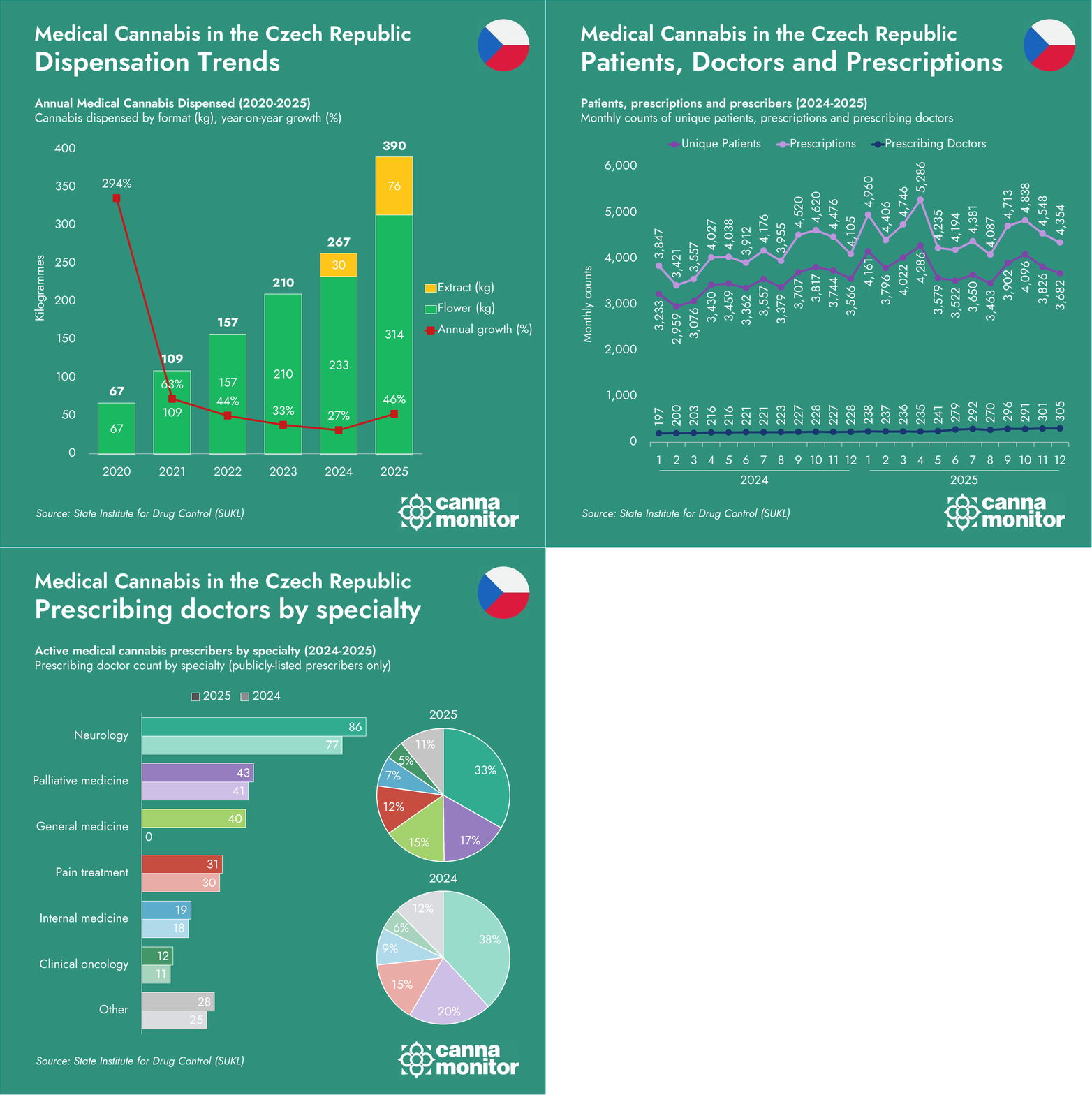
Medical market grew 46% in 2025 to 390kg, its best year since 2021
Czechia’s medical cannabis program grew 46% in 2025. Full-year SÚKL data confirms the GP reform partially succeeded: prescribing doctors rose 28% to 305, flower sales grew 35% (233 to 314 kg), and the extract market more than doubled (30 to 76 kg).
- Domestic EU-GMP producers now anchor supply, while Czech infrastructure increasingly serves cross-border trade.
- Czechia is a leading hemp hub with over 100 projects, hosting Lithuanian delegates exploring 30 institutions, including CzecHemp, Agritec, and Masaryk University, advancing hemp research and applications.
 South Africa — Limpopo hemp pilot tests cultivars as provinces build a compliant corridor
Momentum builds to shift oversight from police to agricultural regulators
A meeting on 27 January addressed enforcement challenges in South Africa’s hemp regulations. The Department of Trade, Industry and Competition (DTIC) was absent. Stakeholders are pushing to transfer oversight from police (SAPS) to agricultural regulators to strengthen compliance and regulatory effectiveness.
- On 30 January, South Africa’s government reassessed SAPS’s role in hemp permit applications following a stakeholder meeting.
- Limpopo’s pilot project tests two ARC-developed hemp cultivars to enhance local agriculture, generate yield data, and promote sustainable practices—fostering rural employment and economic diversification.
Decriminalised use and prohibited trade keep compliant operators squeezed by enforcement and cost
South Africa’s cannabis market is transitional: private use is decriminalised, but commercial trade remains prohibited. Resellers face South African Health Products Regulatory Authority licensing requirements, strict THC thresholds, and high compliance costs.
- Pre-rolls, vapes, and edibles are growing in popularity in South Africa’s cannabis market, with significant growth compared to traditional flower products as of January 2026.
- Over 200,000 traditional healers may soon prescribe cannabis, pending registration under the 2007 Act. Regulations were published for comment in June 2024.
 Morocco — Planting season delayed; cooperatives expand under new seed rules
Planting delays test the cooperative model as legal supply chains scale
Adverse weather delayed Morocco’s cannabis planting season, originally scheduled for late January. Cooperative membership increased 50%. Traditional variety planting is authorized until March 31; imported seeds may be planted from April 1 to June 30.
 Switzerland — Pilot programmes scale participation & strengthen evidence base for reform
Swiss pilot projects attract international attention
France’s OFDT report runs regulated cannabis pilot programs with strict rules: 20% THC cap, no advertising. By end-2025, seven pilots enrolled ~13,000 participants, informing Cannabis Products Act (LPCan), presented in September 2025 and due for plenary debate in 2026.
SOMAÍ and SWISS FX launch new cannabis products
SOMAÍ partnered with Dascoli Pharma to launch Mint Oral Solutions in Switzerland, featuring EU-GMP-certified cannabis extracts with peppermint terpenes to enhance palatability. This strategic expansion follows their Essentuals line.
- SWISS FX is launching new cannabis seeds to expand its CBD product range, adding hemp seeds to its existing selection with carefully selected genetics. The focus is on robust plants, uniform development, and clearly recognizable strain characteristics.
Pilot comparisons sharpen what “regulated access” changes versus the black market
A study from Vaud, Switzerland, compares black-market cannabis with Lausanne’s Cann-L pilot, focusing on THC levels and price volatility, highlighting significant regulatory implications for patients and policymakers.
 EU — Genetics IP moves and court-driven pressure shape the bloc’s cannabis trajectory
EU law forces alignment on UN rescheduling positions
Court of Justice of the European Union rules Hungary violated EU law regarding cannabis rescheduling, confirming member states must adhere to common positions in UN drug policy as of January 27.
EU-wide plant variety rights strengthen IP moats as competition intensifies
The EU’s Community Plant Variety Office granted Aurora community plant variety rights for two proprietary cultivars (Farm Gas™ and Sourdough™), strengthening genetics IP control across EU member states.
 Colombia — Growing market awaits flower roll-out
Export permits to Brasil halted, complicating cross-border trade to Brazil
Colombia‘s Drug National Fund halts export certificates for cannabis to Brazil, using fiscalisation documents instead; THC ≥ 0.2% triggers stricter handling, impacting patient access amid international narcotics-control frameworks.
Growth of 25–35% in 2025 expected to scale-up further in 2026
According to the Colombian Observatory of the Cannabis Industry, medicinal cannabis use increased by 25–35% in the last year, with 24.5% of the population claiming usage. Oils account for 78% of sales, and a >20% growth is expected in 2026 led by new product format launch, including flowers, topicals, as well as telemedicine rollout.
 Argentina — Governance reshuffle and regulatory uncertainty test investment narrative
Medical cannabis oversight moves to drug agency
Argentina transferred medical cannabis oversight to SEDRONAR within the Health Ministry, consolidating drug policy and medical cannabis regulation under one agency. This may streamline approval processes and patient access pathways.
- Argentina’s cannabis industry faces regulatory challenges. Trump’s reclassification could unlock banking access, boost research, and position Argentina as a regional pharmaceutical hub by leveraging competitive costs and technical expertise.
 Uruguay — Record legal sales underpin a more mature regulated market
Uruguay’s legal cannabis market hits record sales in 2025 as Model matures
In 2025, Uruguay has 83,567 registered cannabis purchasers, 10,392 self-cultivators, 55 pharmacies, and 557 clubs serving 19,589 users, with prices ranging from $U 480 to $U 610.
- Pharmacies sold 4,290 kilos of cannabis, a one-ton increase; 75% were epsilon variant sales, with 83,567 registered users, marking a rise from 74,583 in 2024.
Food-grade players push into Colombia as Uruguay’s legal model keeps maturing
Uruguayan hemp foods company GOLAND launched two products in Colombia, as part of its strategy to create a new business unit and expand regionally.
 Costa Rica — Surge in GMP import deals signal early-stage medical market build-out
Supply deals shaping market despite pending rules
Medipharm Labs signed a supply agreement to ship GMP medicinal cannabis products to Costa Rica, targeting a market projected to exceed $35 million annually. Shipments are pending final regulatory approvals.
 Mexico — CBD retail chain sold to Canadian consortium
Paradise claims 300 stores sold to Canadian group
Mexican cannabis-wellness retailer Paradise was reported sold to a Canadian consortium for US$60m with a cited network of 314 outlets, signalling early consolidation in the CBD/cannabis-wellness retail segment.
 Denmark — Cannabis company voluntarily delists from stock exchange
DanCann delists from stock exchange
DanCann Pharma A/S received approval for voluntary delisting from Spotlight Stock Market, effective 22 January 2026, following its 7 January 2026 application.
 Greece — Export‑led strategy goes despite rising international competition
New exporter Grecan joins exclusive list
Grecan Natural Medicine managed to make the first export after 6 years.
- Grecan aims to export 400–600 kg monthly, targeting Germany and the UK, amidst a €13 million Greek medical cannabis market and rising competition from Canadian imports.
 Malta — Court cases dropped by 80% post‑decriminalisation
Recent legal amendments could restrict decriminalisation policy
Malta’s cannabis decriminalisation reduced court cases by 80% and provided regulated access for thousands. However, recent legal amendments now threaten consumer rights and transparency in the cannabis framework.
 Belgium — Stricter possession fines enforced
Uniform possession penalties for 24+ shift the system from discretion to process
From 1 January 2026, Limburg will enforce drug possession uniformly, imposing immediate fines on adults 24+, prioritising guidance for under**-24**s, aiming to prevent addiction and promote health.
 Norway — Prohibition backlash grows as rights arguments target drug policy regime
High volume of sanctions escalate pressure for reform
Norway‘s drug prohibition leads to 1 million sanctions, a £149 billion black market, 300 overdose deaths annually, and 400,000 global deaths, highlighting severe societal impacts and systemic failures.
 Japan — CBN scheduling move signals tighter cannabinoid control in 2026
Tighter control of CBN expected this month
Japan‘s Ministry of Health will designate CBN as a controlled substance in mid-February 2026, removing related products from the market 10 days after the announcement.
Partnerships and product lines face category risk
ENDOCA re-enters the Japanese market through a partnership with Life Activation, as reported on January 26, 2026, highlighting strategic expansion efforts in Asia.
 South Korea — New compounds isolated from flower
New alkaloid isolated with antioxidant activity
Eight compounds isolated from Cannabis sativa flowers, including one new alkaloid; compound 4 inhibited neuroblastoma cells (IC50 22.53 μM) and showed enzyme inhibitory activities for skin applications.
 China — CBD anti-tumour research grows
Promising mechanisms without a clear clinical pipeline
Cannabidiol (CBD) shows multi-target anti-tumour effects, with promising preclinical results; however, clinical translation is hindered by heterogeneity and limited human data, necessitating further trials and standardised protocols.
 Zimbabwe — Licence renewals cull industry
Permit expiration turns renewal compliance into a sector filter
Zimbabwe’s Medicines Control Authority warned that medicinal cannabis licences issued in 2021 will expire in 2026 and must be renewed to avoid losing authorised status. Renewals require a US$20,000 fee and updated compliance documentation.
Renewal costs threaten scale just as markets should mature
Zimbabwe’s cannabis exports face uncertainty with a looming US$20,000 licence renewal fee, impacting farmers amid dwindling exports, as reported on February 1, 2026.
 Botswana — High licence fees signal a deep-pockets-only industrial cannabis model
High fees shape who can enter before the market even starts
Botswana’s cannabis licence fees vary: cultivation from P3,325 to P8,310 per hectare; processing up to P400,000 annually; retail fees range from P60,000 to P110,000 per outlet annually.
- Oratile Masala criticises Botswana’s hemp licence fees, thousands of Pula per hectare, as unrealistic and exclusionary, limiting local farmers’ access to the burgeoning cannabis market.
- Botswana’s first cannabis expo on 30 January 2026 aims to discuss medical cannabis licensing, featuring workshops, with admission at P1,500, alongside the Botswana Cultural & Farmers Expo.
 Ghana — Proposed hemp fees risk pricing locals out
Hemp rules price out domestic operators before the sector can form
Ghana proposes hemp licence fees of up to US$45,000 per hectare, potentially the highest in the world, as of January 8, 2026.
- Ghana’s draft hemp rules propose fees from $9,000 to US$45,000 per hectare, risking local participation and investment, with stakeholders deeming them the highest globally, pending parliamentary ratification.
 Gabon — Seizures surge as enforcement intensifies
Seizures surge alongside counterfeit-medicine pressure
In 2025, Gabon police seizures of cannabis nearly doubled to 975 kg, alongside counterfeit medicine tablets increasing from 61,000 to over 76,000, highlighting significant drug enforcement challenges.
 Grenada — Parliament approves decriminalisation
Decriminalisation strengthens reform momentum
Grenada‘s parliament decriminalises cannabis for adults 21+, allowing possession of 56 grams, cultivation of four plants, and automatic expungement of minor offences, while prioritising youth safety and public health.
 Barbados — Licensing pipeline expands as new medical centres move towards launch
New facilities near launch as the regulatory system moves from paper to operations
Two new medicinal cannabis facilities are progressing towards operational status in Barbados, according to the licensing authority, which has issued about 12 licences across the value chain.
 Antigua and Barbuda — Six license farms and four dispensaries shape emerging market
Licensed farms and dispensaries build a base case for regulated growth
Antigua and Barbuda is developing its legal cannabis sector with six licensed farms and four dispensaries currently operational, aiming to establish regulated exports as the industry grows.
- Caribbean cannabis growers anticipate increased domestic sales and export opportunities as regulations evolve and consumer demand rises across the region.
 Saint Vincent and the Grenadines — Compliance-focused model highlights regulated Caribbean pathway
Regulation-as-product differentiates the market in the Caribbean
Saint Vincent and the Grenadines highlights a compliant medical cannabis model, impacting cultivators and regulator.