



Market

Science
 US Hemp Clampdown Threatens Exctintion of $28B Hemp-Derived THC Market
 The U.S. government shutdown ended with a federal funding bill that also rewrites the definition of hemp, which will, after a 12-month grace period, effectively ban most hemp-derived THC products including drinks, edibles, vapes and other THC items.
- Congress has closed the loophole that allowed hemp-derived THC beverages and edibles to be widely sold.
- The new limit: no more than 0.4 mg total THC per container, and products made with synthetically converted cannabinoids will be prohibited.
- Hemp-derived THC ban affects $28.3 billion industry; bipartisan support for ban; uncertainty for businesses and future cannabis laws.
- The hemp ban exposes decades of regulatory chaos, forcing untested products off the market and protecting consumers. It energizes licensed operators, creating momentum for commonsense regulations and industry professionalization.
- Trump’s hemp legislation threatens CBD businesses, prompting legislative pushback and uncertainty in the hemp industry’s future and regulations.
- States resist Trump’s hemp THC ban, asserting local regulations and maintaining legality despite federal restrictions on hemp-derived products.
- Federal hemp crackdown leads to **MMJ’**s advancement in compliant cannabinoid drug development under FDA and DEA oversight for pharmaceuticals.
- Tilray Brands criticised what it called “misguided prohibitionist measures” arguing that outright bans would drive the market underground and harm consumer safety.
- Rhode Island senators support hemp ban, risking local industry; concerns raised over THC products and regulatory implications for businesses.
- Supreme Court ruling classifies false advertising in hemp industry as racketeering, exposing brands to severe legal consequences and liabilities.
- Congress is imposing new limits on natural cannabinoids in the FY 2026 Agriculture Appropriations Bill.
- Overall U.S. support for legalizing cannabis fell from about 70% to 64% between 2023 and 2025. The drop is driven by a sharp decline in support among Republicans (from roughly 55% in 2023 to around 40% in 2025), while support among Democrats and independents remained high.
- Americans’ belief in progress on illegal drugs rose to 45%, while 64% support legal marijuana, reflecting a significant Republican optimism shift despite declining support for legalization among conservatives.
- GOP leaders block veterans’ medical marijuana access, prompting criticism from Senator Merkley for being cruel and unhelpful to veterans.
- GOP Rep. Reschenthaler expresses cautious optimism for Trump’s marijuana rescheduling, citing 52% of women report orgasm difficulty, with cannabis potentially aiding sexual function and serving as an opioid alternative.
- Congress removed a measure allowing VA doctors to recommend medical cannabis, sparking criticism from veterans’ groups and reform advocates.
- New York cannabis shops can now offer discounts and promotions following new rules approved by the state Cannabis Control Board.
- In California, a growing number of U.S. cannabis companies are refusing to pay all federal income taxes (or claiming they dona’t have to) pay all federal income taxes under Section 280E, sparking what many call a “cannabis tax revolt.”
- Trump administration’s immigration raid on **Glass House Brands** caused $26 million losses and significant operational disruptions for the company.
- Texas officials released a hemp law checklist amid a 46% rise in cannabis use among adults 65+, highlighting regulatory changes and compliance requirements for businesses selling consumable hemp products.
- Texas advances hemp regulations despite potential federal ban, ensuring access to the market and supporting local farmers and businesses.
- Florida officials advance marijuana legalisation initiative to ballot review after lawsuit over delays by pro-marijuana group Smart & Safe.
- Massachusets; Gov. Healey proposes cannabis pardon; Commissioner Concepcion resigns; commission restructuring debated amidst internal issues and legislative changes.
- Pennsylvania; Workers at Green Thumb Industries ratified their first collective bargaining agreement after a 45-day strike, marking the longest successful work stoppage in U.S. cannabis history, securing improved wages and benefits.
- Upcoming elections in Virginia and New Jersey could significantly impact cannabis policy and market regulations on the East Coast.
- Virginia lawmakers may legalize adult-use cannabis sales by 2026 after Aaron Rouse said he’s “very optimistic” under incoming governor Abigail Spanberger.
- Minnesota hemp producers prepare to challenge federal THC ban limiting products to 0.4 mg per container, threatening industry viability.
- Tennessee‘s hemp industry has reached an agreement with state agencies allowing licensed businesses to sell THCA until June 30, 2026, despite new laws banning it from January 1, affecting approximately 75% of the market.
- Nebraska Attorney General Mike Hilgers said Wednesday that the Omaha Tribe’s proposed tax compact was too big an “ask” for the state, stopping short of denying the state’s decision to end negotiations was connected to the tribe’s plans for medical marijuana sales.
- **Nebraska’**s medical cannabis commissioners approved two growers for 1,250 plants each, maintaining regulations despite public criticism, with 71% voter support and a review of rejected applications.
- Alabama judge names four top applicants for medical cannabis dispensary licences, allowing patient registration for the programme to commence.
 Cannabis retailers and product manufacturers are moving away from potency and embracing products that offer “functional THC.”
- Trulieve reported third quarter 2025 results showing operational discipline and strong cash flow. Revenue reached $288 million with a 59% gross margin. Year-to-date cash flow from operations totaled $214 million, with free cash flow of $173 million.
- Cresco Labs reported Q3 2025 revenue of $165 million, net loss of $22 million, and adjusted EBITDA of $40 million, maintaining market leadership with a 48.8% gross margin.
- Cresco Labs launches flower brand in Germany, entering EU market and partnering with Blossom for patient-specific products via pharmacies.
- Verano Holdings Corp redomiciled from British Columbia to Nevada on Nov. 3, 2025, following shareholder approval on Oct. 27, 2025, and a court order on Oct. 30, 2025.
- Ayr Wellness sells assets in foreclosure, restructuring to reduce debt by 50% while continuing operations in select states.
- Vireo Growth Inc. reported Q3 2025 revenue of $91.7 million, a 264% increase, with $117 million cash, and a net loss of $26.3 million, reflecting ongoing M&A strategies.
- IAnthus shows Q3 results; Revenue of $35.4 million, an increase of $0.2 million from Q2 2025 and a decrease of $4.9 million from the same quarter in the prior year.
- Gross profit: $15.6M (down $0.6M from Q2 2025, down $2.5M YoY), gross margin: 44% (down 188 bps from Q2, down 86 bps YoY), net loss: $12.5M (improved from $18.7M in Q2 2025, worse than $11.6M YoY), adjusted EBITDA: $2.5M (up from $1.9M in Q2 2025, down from $5.3M YoY).
- Cookies faces insolvency after a court ruling diverts revenue to settle an $8.4 million judgement from a failed partnership.
- Anebulo Pharmaceuticals reported a net loss of $2.2 million for Q1 FY2026, with cash reserves of $10.4 million and ongoing Phase 1 trials for selonabant addressing cannabis toxicity in children.
- In Los Angeles, hemp building materials gain prominence at Greenbuild, highlighting sustainability, fire resistance, and evolving building codes for bio-based construction.
- South Dakota, the leading US hemp fibre producer, expands its processing capacity with a new facility, while federal legislation threatens the industry’s growth amid rising demand for hemp products.
- Cheech & Chong launch their first Dispensoria in Tulsa, promoting community-focused cannabis experiences and products for medical relief and wellness.
- Seth Rogen highlights the rising THC beverage market, noting a 1-3.9% reduction in opioid prescriptions near dispensaries, amid increased lobbying from alcohol companies against cannabis products.
- FLORA is rebranding its hemp-derived beverages with a proprietary cannabinoid blend, enhancing absorption, using 100% organic ingredients, and excluding artificial sweeteners for uplifting psycho-social effects.
- Highpour launches non-alcoholic THC seltzers and margaritas as sophisticated alternatives for adults, focusing on potency and flavour uniformity.
- Edible Arrangements’ parent company is expanding into hemp-derived THC beverages and low-dose gummies, marketing them as wellness-focused alternatives to alcohol. The products, sold online, emphasize benefits like relaxation and sleep while avoiding high doses or inhalable forms.
- Barney’s Farm expands U.S. operations, enhancing supply chain control, launching new strains, and collaborating with industry leaders, showcasing growth at MJBizCon 2025, underpinned by 40 years of breeding expertise.
- Organic Payment Gateways launches integration for BigCommerce, enabling secure credit card payments for cannabis seed retailers in the US.
 Arizona study in relation to dogs with consistent CBD use showed a decline in the intensity of aggressive behaviors over time compared to a more steady trend among non-use dogs.
- Cannabidiol’s popularity in companion animals has surged, with 2,592 dogs (5.5%) reported using CBD. Prevalence varies by state, ranging from 1.6% to 9.7%. Dogs with dementia had an 18.2% CBD usage rate, showing potential therapeutic effects, particularly for age-related conditions like osteoarthritis and anxiety.
- CBD-IN delivery method effectively relieves pain without side effects, targeting nerve hyperactivity without affecting healthy neurons or causing dependency.
- Mothers using medical cannabis show greater socioeconomic vulnerability and anxiety compared to fathers, highlighting the need for gender-responsive support.
- Women increasingly participate in cannabis cultivation, especially in legal contexts, but still face gender disparities and traditional barriers.
- Document reviews numerous studies on cannabis use, highlighting trends, prevalence, and neurobiological impacts, with over 100 references spanning various aspects of cannabis and its effects on behaviour.
- Research identifies cannabinoid-sensitive and -resistant oral bacteria, revealing that cannabis use may exacerbate periodontitis through microbial dysbiosis, necessitating further studies on therapeutic antimicrobial agents.
- Cannabis with THC reduces alcohol consumption and urge but does not significantly affect craving in heavy drinkers.
- A study of 367 college students found monthly simultaneous cannabis and alcohol use significantly predicted depression (β=0.322 males, β=0.296 females), with anxiety and stress linked to males only.
- Regular cannabis users often exceed THC legal limits without evidence of impairment, raising concerns about current driving laws’ validity.
- Analysis highlights the rise of Cannabinoid Hyperemesis Syndrome (CHS) in emergency departments, particularly among adults aged 18 to 35. From 2016 to 2022, CHS visits surged from 4.4 to 22.3 per 100,000 visits, peaking during the COVID-19 pandemic, indicating a growing public health concern.
- Abstrax fuels global collaboration at the 2025 LLM Hackathon, empowering scientists to merge AI and chemistry for breakthroughs in olfaction, chromatography, and molecular flavor prediction.
 Germany Imports a Record 57 tonnes in Q3, but Headwinds Loom from Medical Reform
The Bundesrat’s review of the 2025 amendment to the Medizinal-Cannabisgesetz proposes applying standard pharmaceutical price rules to medical cannabis, banning all advertising aimed at non-experts, prohibiting mail-order sales of cannabis flowers, and requiring an in-person doctor–patient consultation before prescribing.
- On November 21, Germany‘s Bundesrat approved three amendments to the Medical Cannabis Act, tightening regulations while rejecting mail-order penalties, impacting patient access and industry practices moving forward.
- These changes aim to tighten oversight, reduce misuse, and align medical-cannabis handling with other controlled medicines.
- Cansativa views the MedCanG reform as entering a “critical parliamentary phase.” It emphasizes that upcoming decisions on pharmacy oversight, in-person doctor–patient consultations, telemedicine, and a ban on cannabis-flower shipping will determine whether the law remains patient-friendly and ensures reliable supply—or becomes overly restrictive.
- Federal Association of Pharmaceutical Cannabis Companies (BPC) appoints Burkhard Blienert as political advisor to enhance medical cannabis legal framework and improve patient access in Germany.
- Federal Council proposes cannabis prescription regulations, price controls, and an advertising ban to protect public health and ensure monitoring.
- Regulatory uncertainty in Germany caused by shifting coalition politics and a still‑unfinished review of the medical cannabis law is deterring investment and delaying financing rounds in the cannabis industry.
- Many businesses are redirecting resources into preparing for possible new legislation rather than innovation or expansion. Applications for pilot‑projects are being repeatedly rejected by authorities because there are no clear guidelines, so companies are forced to “shoot in the dark.”
- Restrictions on home‑grow and unclear rules for clubs further add to industry hesitation. The article concludes that the cost of this prolonged uncertainty for businesses, investors, and future patients is very high.
- Many businesses are redirecting resources into preparing for possible new legislation rather than innovation or expansion. Applications for pilot‑projects are being repeatedly rejected by authorities because there are no clear guidelines, so companies are forced to “shoot in the dark.”
- Green party member visits Canopy Growth, discussing medicinal cannabis regulations and the company’s commitment to quality and local job creation.
- Federal Association of Pharmaceutical Cannabis Companies (BPC) appoints Burkhard Blienert as political advisor to enhance medical cannabis legal framework and improve patient access in Germany.
- German Pain Society advocates reducing bureaucracy in medical cannabis prescriptions to enhance physician focus on patient care and treatment.
- Cansativa views the MedCanG reform as entering a “critical parliamentary phase.” It emphasizes that upcoming decisions on pharmacy oversight, in-person doctor–patient consultations, telemedicine, and a ban on cannabis-flower shipping will determine whether the law remains patient-friendly and ensures reliable supply—or becomes overly restrictive.
- Germany’s BfArM has tightened its rules for approving cannabis cultivars. Each variety must now have a detailed dossier documenting production and processing according to EU-GMP pharmaceutical standards, particularly post-harvest.
- This move responds to a sharp increase in imports, raising concerns about quality, traceability, and safety. The regulatory burden and compliance costs are expected to rise, likely reducing the range of cultivars available on the market.
- Sanity Group, alongside district offices in Friedrichshain-Kreuzberg, Neukölln, and Pankow, saw the Federal Office for Agriculture and Food reject their cannabis pilot project application on November 28, 2025, which aimed to provide legal cannabis sales for research purposes. An objection has been filed against this decision.
- The Federal Office for Agriculture and Food (BLE) rejected six cannabis pilot projects, citing legal limits, health risks, youth protection, potential increased consumption, insufficient evidence, and practical regulatory challenges, blocking commercialization under current German law
- The “research clause” in the MedCanG law is intended only for narrowly defined scientific or cultivation studies, not broad retail distribution. Many applications were also incomplete, lacking documentation on responsible staff, safety plans, or prevention measures for vulnerable groups.
- As a result, the planned pilot retail projects under the legalization framework are effectively stalled, with no approvals granted so far.
- The Federal Office for Agriculture and Food (BLE) rejected six cannabis pilot projects, citing legal limits, health risks, youth protection, potential increased consumption, insufficient evidence, and practical regulatory challenges, blocking commercialization under current German law
- Bavaria cannabis cultivation club legally distributed its first harvest to members: the club cultivates cannabis in Saxony due to restrictive Bavarian regulations.
- Pharmacy owner struggles to secure card payments due to cannabis prescription services, facing rejections from banks and providers.
Germany imported 56.9 t of medical cannabis in Q3 2025 (- up 19.3% vs Q2), bringing the 9-month total to 142 t (almost double all of 2024) driven by high demand amid looming restrictions. Germany‘s cannabis market may face oversupply, falling prices, and challenges risking consolidation amid regulatory pressures and market saturation.
- According to Mycare, over 1,300 medical cannabis flowers are available from 58 manufacturers each offering around 23 varieties, led by Remexian Pharma (203 varieties), Cantourage (107), and Cannamedical (104).
- Price range extends from €2.99 to €17.09 per gram, with an average of €6.81; 78% between €5 and €10.
- The THC content varies considerably, from 1 to 37%. Sativa varieties contain an average of 21.9%, Indica varieties 23%, and hybrids 23.8%.
- Dutch EU-GMP grower Bedrocan launches Bedrocan forte with 25% THC available for the German market. The product is available in bulk packaging of 100 and 400 grams.
- SOMAÍ partners with Cookies to introduce medical cannabis extract products globally. The collaboration transforms Cookies’ famous terpene and flavonoid-rich flower genetics into standardized, high-purity extracts available in forms like oral drops and inhalation products, combining culture and compliance.
- Blossom, a Portugal-based, EU-GMP certified pharmaceutical manufacturer and contract manufacturing organisation ****to launch Cresco-branded flower in Germany, marking Cresco‘s first entry into the EU medical cannabis market.
- Hanf.com, in which Neural Therapeutics Inc. holds a 30.75% stake, has opened two new retail stores in northern **Germany;** in Bielefeld and Herford, bringing Hanf.com’s network to 19 locations across Germany.
- Canify AG reports that in the first nine months of 2025 it more than doubled its 2024 revenue, supporting a share-issue of up to 36,698 new shares at €148 to fund expansion, product development, GMP-certified capacity growth, telemedicine and planned international expansion.
- Cannabis Club Systems achieves 900 clients, launching AI tools for enhanced member experiences and expanding into international markets.
- Green Mile Social Club launches cannabis cultivation in **Duisburg,** becoming the city’s first fully licensed cannabis club with advanced technology.
- Germany lags in hemp processing infrastructure, risking its position in the growing European hemp market compared to France and Austria.
Germany saw a slight increase in cannabis use post-legalisation, but significant effects remain unclear and require further monitoring.
- Cannabis 12-month use in Germany rose from 4.6% (2012) to 8.8% (2021) and 9.8% (2024), though the 2024 increase was not statistically significant. Most users (92.3%) consumed cannabis, mainly smoked as joints (88.6%). Key motives were getting high (66.8%) and relaxation or stress relief (61.3%).
- Researchers conclude the mild rise likely reflects a longer-term trend rather than the partial legalisation itself. They note it is still too early to draw definitive causal conclusions.
 Australia: Market growth amid TGA telemedicine review and closed-loop model concerns
The TGA is reviewing medicinal cannabis regulations to establish better quality controls addressing concerns about telehealth platforms exploiting system loopholes.
- Federal Health Minister Mark Butler emphasised the need for proper quality controls, particularly for “closed-loop models” where patients receive referrals, prescriptions, and dispensations from the same business.
- Prominent medicinal cannabis doctor banned from prescribing by AHPRA after overseeing over 4,200 patients via telehealth, with concerns raised regarding prescriptions exceeding Western Australia’s 30-gram monthly limit.
- Welsh himself is not bashful about his prescribing: “This year alone, I have written 14,711 prescriptions. That’s 102,977 cannabis products worth an estimated $9,782,815 to the cannabis industry,” he said.
- TGA updated its social media advertising guidance to clarify legal obligations and curb unlawful promotion of therapeutic goods online.
- ACPharm Queensland fined $99,000 for unlawful advertising of therapeutic goods, including medicinal cannabis, by the TGA.
- Prominent medicinal cannabis doctor banned from prescribing by AHPRA after overseeing over 4,200 patients via telehealth, with concerns raised regarding prescriptions exceeding Western Australia’s 30-gram monthly limit.
- Long-rumored issue with Plant Growth Regulators (PGRs) in Thai cannabis imports has been recently on the spotlight, revealing a regulatory gap.
- Certain PGRs can form carcinogenic by-products when combusted, yet Australian standards (TGO93) don’t test for them, allowing imports to meet technical compliance while falling short of medical-grade safety. This creates an unfair system where domestic producers adhere to strict GACP/GMP standards, while some imports bypass those requirements.
- The participants at a cannabis symposium on Australian law and UN drug conventions were chiefly concerned with heavy-handed drug policing and related racial disparities.
- In New South Wales, a new bill called the Road Transport Amendment Medicinal Cannabis Bill 2025, would allow people using legally prescribed medical cannabis to challenge cannabis‑related driving offences, even if a THC test is positive and prevent penalties if there’s no impairment.
- It addresses the current law, which treats any detectable THC in saliva, blood or urine as a driving offence regardless of impairment, effectively barring many medical cannabis users from driving.
- In Queensland, cannabis companies are challenging existing driving regulations, asserting that medicinal cannabis users should not be classified similarly to illicit drug users. A co-founder of a cannabis farm has highlighted this issue by undergoing a driving test, emphasising the need for legal reform in this area.
- A medicinal cannabis user and co-founder of one of Queensland‘s cannabis farms wants an overhaul of driving laws he calls unfair. He says patients with a prescription shouldn’t be treated as drug users and to prove his point he put himself to a driving test.
Australia’s medicinal cannabis market is experiencing rapid growth according to a recent Penington Institute report, with SAS-B approvals doubling and sales reaching 6.59 million units in 2024, though the illicit market remains dominant at over $5 billion. The report highlights that 700,000 Australians use medical cannabis with only 29.9% accessing it via prescription, while 48% now support legalisation.
- Pastilles have surpassed oil as the second-most prescribed dosage form for medicinal cannabis under the Special Access Scheme, with a 26.5% share compared to oil’s 24.7% in November 2025.
- Vitura Health’s Doctors on Demand reported that 54% of young adults used GP telehealth in the past year, with 377,000 online consultations recorded. Trust in telehealth is high, with 80% satisfied, highlighting convenience as a primary motivator for Australians opting for digital healthcare solutions.
- Montu research shows 75% of Australians believe telehealth improves healthcare access, with 64% supporting medicinal cannabis integration into mainstream care.
- A provider survey revealed 69% find the process overly complex, and despite 85% supporting medicinal cannabis for specific conditions, only 15% are authorised prescribers due to legal liability concerns (51%) and lack of clear guidelines (41%).
- Montu research shows 75% of Australians believe telehealth improves healthcare access, with 64% supporting medicinal cannabis integration into mainstream care.
- Cannim Group has entered voluntary administration, forcing its UK arm and clinic Lumir Clinic to suspend new patient enrolments and resign their director. Creditors are pursuing “millions” in unpaid debts; one secured creditor alone is reportedly owed ~A$4 million.
- The collapse follows months of cash-flow strain and mounting liabilities in the UK subsidiary. The company’s assets are already attracting interest for purchase or recapitalization, but the future for patients, creditors, and surviving operations remains uncertain.
- Bioxyne to manufacture and distribute **Curaleaf’**s medical inhalation device in Australia, enhancing access to regulated cannabis technology.
- ECS Botanics raises A$1.95 million to enhance product offerings and expand international distribution, particularly in Europe.
- ANTG inks distribution agreement with Curaleaf in the UK.
- Canopy Growth launches new medical cannabis softgels in Australia, enhancing patient-friendly options amid growing market demand and competition.
- Medcan Australia director shows 20% improvement in reaction times using prescribed medicinal cannabis in a driving simulator experiment.
- Spring Sciences Australia postpones ASX IPO to **Q1 2026,** exploring acquisition opportunities during pre-IPO stage.
- Tree House Distribution, Altermedic, J Lady, Xetra, Single State and Grandiosa have joined The Entourage Effect portfolio, exciting news for pharmacy partners announced on November 18, 2025.
- Provocatus partners with ANTG, Sativite, and Novachem to enhance veteran access to medicinal cannabis alternatives.
- Wholelife owners acquire 51% stake in Rays Wellness to facilitate national expansion of the medicinal cannabis dispensary.
- Australia views industrial hemp as a sustainable “super-crop” with applications beyond fiber and seeds, including superfoods, sustainable construction materials, biodegradable packaging, textiles, and oils.
- A $2.5 million multi-year research program aims to improve hemp varieties, cultivation, and processing, targeting an industry value above AUD 10 million by 2026.
- Trials indicate hemp can grow in colder, drier, and tropical regions, expanding potential cultivation areas. Although current hectarage is modest, the sector is gaining momentum as part of a low-carbon, circular-economy agricultural strategy.
- A $2.5 million multi-year research program aims to improve hemp varieties, cultivation, and processing, targeting an industry value above AUD 10 million by 2026.
University of Adelaide researchers in collaboration with German tech company Compolytics, have developed a non-destructive leaf scanning method that can accurately predict the cannabinoid concentrations of cannabis plants.
- Hyperspectral imaging predicts cannabinoid yields in Cannabis sativa fan leaves, enhancing early selection for growers and breeders.
- Ananda Pharma‘s Phase 1 study shows MRX1 has a favourable safety profile in healthy volunteers, with no serious adverse events reported.
 Canada: Quebec Rolls Out Vapes as Export-Led Growth Faces International Headwinds
Canada generated over $5.4 billion in cannabis tax revenue since legalization, with Ontario leading provincial collections at $1.5 billion.
- Canada‘s Budget 2025 aims to save $4.4 billion by adjusting medical cannabis benefits for RCMP and Veterans Affairs Canada.
- Results from a poll released indicate the legal cannabis sector in Canada is generally viewed positively by the country’s residents.
- The Canadian cannabis industry is calling on its federal and provincial governments to support its global export ambitions by simplifying export-permit processes, including cannabis in national export programs, and granting access to export-oriented financial services.
- New Brunswick Premier discusses including cannabis in interprovincial trade agreement, aiming for a single excise stamp to boost industry.
- This push reflects concern that regulatory burdens, high compliance costs and lack of government backing are causing Canada to lose its early-mover edge in the international medical-cannabis market.
- Export delays, market-incompatible testing standards, and exclusion from export-promotion tools are cited as key obstacles.
- Without new support measures, industry leaders warn Canada risks ceding global market share, jobs and research investments to more agile competitors abroad.
- Uber has been lobbying the Alberta government on issues “relating to the provision of smartphone applications with respect to regulated items such as alcohol and cannabis,” according to a lobbying notice filed on October 24.
The Société québécoise du cannabis (SQDC) will begin selling cannabis vaping products starting November 26, 2025. The initiative aims to provide a regulated, lower-risk alternative and reduce the share of consumers purchasing from the illicit market, which is estimated at around 28% in Québec.
- All products will comply with legal limits, including a THC cap of 30% and restrictions on youth-targeted flavors, and will be sourced from 14 authorized suppliers. SQDC staff will provide guidance on safe usage to support public health objectives.
- Canada has strong potential to become a global destination for “cannabis tourism,” but that success is being held back by a lack of clear regulations allowing public consumption of cannabis.
- According to researcher Susan Dupej from University of Guelph, current laws prevent visitors from touring cannabis farms or enjoying consumption lounges, blocking experiences similar to vineyard tours or wine tasting.
- This regulatory gap limits Canada’s ability to offer cannabis‑centered tourism experiences like farm tours, tastings, or wellness retreats with cannabis components.
- According to researcher Susan Dupej from University of Guelph, current laws prevent visitors from touring cannabis farms or enjoying consumption lounges, blocking experiences similar to vineyard tours or wine tasting.
- Canada‘s cannabis industry growth is stabilising, with GDP contributions from licensed producers and stores showing recent modest declines and corrections.
- Canadian households spent over $9 billion on cannabis in 2024, with legal market spending reaching $6.071 billion.
- Canada‘s cannabis industry must unite to advocate for economic recognition and reform against burdensome taxes and regulations.
- Canadian cannabis producers disappointed by Budget 2025 proposals, including reduced medical cannabis reimbursements and lack of industry support measures.
- In Q3 2025, Avicanna reported revenue: US$6.4 million for the quarter and US$18.88 million for the first nine months, gross profit of US$3.15 million with a ~49% margin (affected by non-recurring costs), and an adjusted EBITDA loss of US$0.79 million (improved year-over-year).
- Organigram Global is receiving support from the New Brunswick government as the company undertakes a $9.3-million investment to modernize its Moncton facility.
- Opportunities New Brunswick is supporting the project with a non-repayable contribution of up to $2 million.
- The project involves upgrading 9,000 lights to LED fixtures in 75 grow rooms at Organigram’s flagship facility to increase crop yields by boosting flower output, enhancing efficiency, and reducing costs.
- The Crown corporation says the investment is expected to increase provincial GDP by over $3.3 million and generate an estimated $424,000 in direct and indirect provincial tax revenue by the end of 2026.
- Opportunities New Brunswick is supporting the project with a non-repayable contribution of up to $2 million.
- Village Farms reports record financial performance in Q3/25, with significant growth in net sales and international cannabis exports and cash flow improvements across operations.
- In a new 2025 survey by Village Farms International more than half of cannabis consumers in Québec said they are interested in purchasing vape products through legal and regulated channels, citing product safety and quality as key motivations.
- Tilray Brands expands globally with new cannabis products in Panama, Germany, Italy, and Australia, enhancing patient access and innovation.
- Tilray launches Good Supply 1 g vape cartridges in Québec, featuring Pineapple Express and Blue Dream flavours, compliant with regulations.
- Medipharm Labs reports 17% revenue increase in Q3 due to rising demand for medical cannabis products and services.
- MediPharm announces complete dismissal of defamation action against it by Apollo, Nobul, and Regan McGee under Ontario Anti-SLAPP law.
- Rubicon Organics reports Q3 2025 revenue growth, new cannabis facility licensed, and positive Adjusted EBITDA for six consecutive quarters.
- Rubicon Organics secures $4 million financing from Community Savings Credit Union to support strategic growth initiatives in cannabis production.
- Avicanna reports Q3 2025 revenue growth, new patents, and international expansions in cannabinoid-based product markets.
- MTL Cannabis reported Q2 revenue of $25.4 million, with net revenue at $20.6 million and gross margins of 50%.
- Ayurcann generated C$14.6M in Q1 2026, with a gross profit of C$2.2M and a gross margin of 26%. It is now a top three vape producer in Ontario with a 5% national share, having launched 30 new SKUs in the past six months.
- Aurora Cannabis reports record medical cannabis revenue growth, strong EBITDA, and maintains a debt-free balance sheet for Q2 2026 amid strategic international expansion and operational efficiencies.
- Canopy Growth reports improved financial performance, with increased revenues, reduced losses, and a stronger balance sheet for Q2 FY2026.
- Cronos Group achieved record net revenue and gross profit in Q3 2025, driven by strong sales in Israel and Canada.
- Auxly reports significant revenue growth, improved profitability, and strong market position in Canadian cannabis sector for Q3 2025.
- High Tide to open four new Canna Cabana locations in Alberta and Ontario, expanding its total to 215 across Canada.
- Nextleaf Solutions launches new cannabis brand Yard, debuting five products across Canada from November 2025, targeting THC-forward consumers.
Cannabigerol (CBG) shows non-intoxicating effects and potential therapeutic benefits, differing from THC in pharmacokinetics and pharmacodynamics.
- Youth-led project develops cannabis guidelines for 16-24 year-olds, funded by CIHR; aims to reduce youth cannabis use through research, surveys, and community engagement, with zines and posters for outreach.
 United Kingdom: Australian Companies Enter Market, Sativex Changes Hands
The 2025 report from the All‑Party Parliamentary Group for Medical Cannabis under Prescription (APPG) highlights that despite legal access since 2018, only six NHS prescriptions have been issued for full‑spectrum cannabis medicines, while roughly 1.4 million people reportedly rely on illicit cannabis for medical use.
- It estimates a mature UK medical‑cannabis market could be worth up to £5 billion annually and support 100,000 jobs.
- Prohibition policies increased cannabis potency, worsening psychosis risks, while medical cannabis shows potential benefits for psychiatric disorders without inducing psychosis.
- UK medical cannabis industry could exceed **£5 billion** annually, requiring urgent regulatory reforms for patient access and economic benefits.
- Medical cannabis patients report high treatment effectiveness, improved quality of life, yet face stigma and legal awareness challenges.
- Medical Cannabis Awareness Month promotes education, advocacy, and collaboration among stakeholders to enhance access and understanding of cannabis-based treatments.
 Jersey; Health Minister criticises medicinal cannabis legalisation, calls for better controls, amid rising prescriptions and mental health concerns.
 Isle of Man; The Green Lounge CSC, Isle of Man‘s first medicinal cannabis café, opens, promoting community, education, and responsible cannabis use.
- UK medical cannabis industry could exceed **£5 billion** annually, requiring urgent regulatory reforms for patient access and economic benefits.
CNX Therapeutics acquires Sativex from Jazz Pharmaceuticals, enhancing its CNS portfolio and ensuring patient access to essential medicines.
- UK cannabis industry growth relies on domestic cultivation for job creation, innovation, and improved patient outcomes in healthcare.
- Curaleaf Laboratories partners with Australian Natural Therapeutics Group (ANTG) to manufacture and distribute medicinal cannabis products in the UK, enhancing patient access and care.
- Bioxyne subsidiary Breathe Life Sciences UK has received approximately $1.7 million in funding from economic development agency South of Scotland Enterprise (SOSE) to establish its UK medicinal cannabis manufacturing and distribution facility.
- Bioxyne has also secured £850,000 funding to establish a UK cannabis facility, targeting a £3,261 annual spend per patient, amid a growing UK market projected to expand significantly by 2026.
- Pharmadata, the Australian health-tech firm behind Canview and the Care Effect platform, has launched Medistack, a modified prescribing and patient-management system in the UK, enhancing patient registration, eligibility checks, consult management, and script issuance, aimed at optimising cannabis patient care.
- Co Antrim couple improves lives with medical cannabis, reducing reliance on painkillers, supporting affordable access initiatives for others.
- Ananda Pharma aims to develop the first regulator-approved CBD treatment for endometriosis, focusing on rigorous research and clinical trials.
 Italy’s €500M CBD Sector Seeks European Review of Hemp Flower Ban
European Court of Justice poised to overturn **Italy’**s prohibition on hemp flowers and CBD products, impacting industry regulations significantly. Italy’s top administrative court has referred the national ban on CBD and hemp flowers to the Court of Justice of the European Union to determine if it violates EU law.
- The 2025 decree classified hemp flowers and related CBD products as narcotics, even when derived from certified low‑THC hemp varieties.
- The legal questions focus on whether **EU rules allow a member state to impose such restrictions and whether the ban infringes on the EU’s free movement of goods. If the CJEU rules against Italy, the country may have to re-allow hemp flowers and CBD products under EU standards.
- The Italian legal system has referred the dispute over the ban on hemp flowers to the Court of Justice of the European Union (CJEU), potentially ending years of uncertainty for the hemp sector.
- The case challenges national decrees that treat hemp flowers and related products as narcotics even when THC levels are minimal, arguing they conflict with EU rules on free movement of goods.
- The outcome could impact roughly 15,000 workers and a market generating around €500 M annually. If the CJEU rules in favour of the hemp industry, current bans could be overturned , offering legal clarity and protecting supply‑chains across Europe.
- The case challenges national decrees that treat hemp flowers and related products as narcotics even when THC levels are minimal, arguing they conflict with EU rules on free movement of goods.
The role of the pharmacist preparing cannabis-based treatments has evolved significantly over the past 12 years, becoming a crucial link between doctor and patient, guiding both on products and usage.
- Pharmacist‑preparers coordinate closely with doctors to interpret prescriptions and advise patients, especially those new to cannabis therapy, addressing doubts and providing tailored guidance.
- The aim is to expand access across Italy by involving more pharmacists so that distribution becomes more widespread and accessible.
Innovative extraction using HFO-R1234ze enhances CBD recovery from Cannabis, outperforming traditional methods in efficiency and environmental impact.
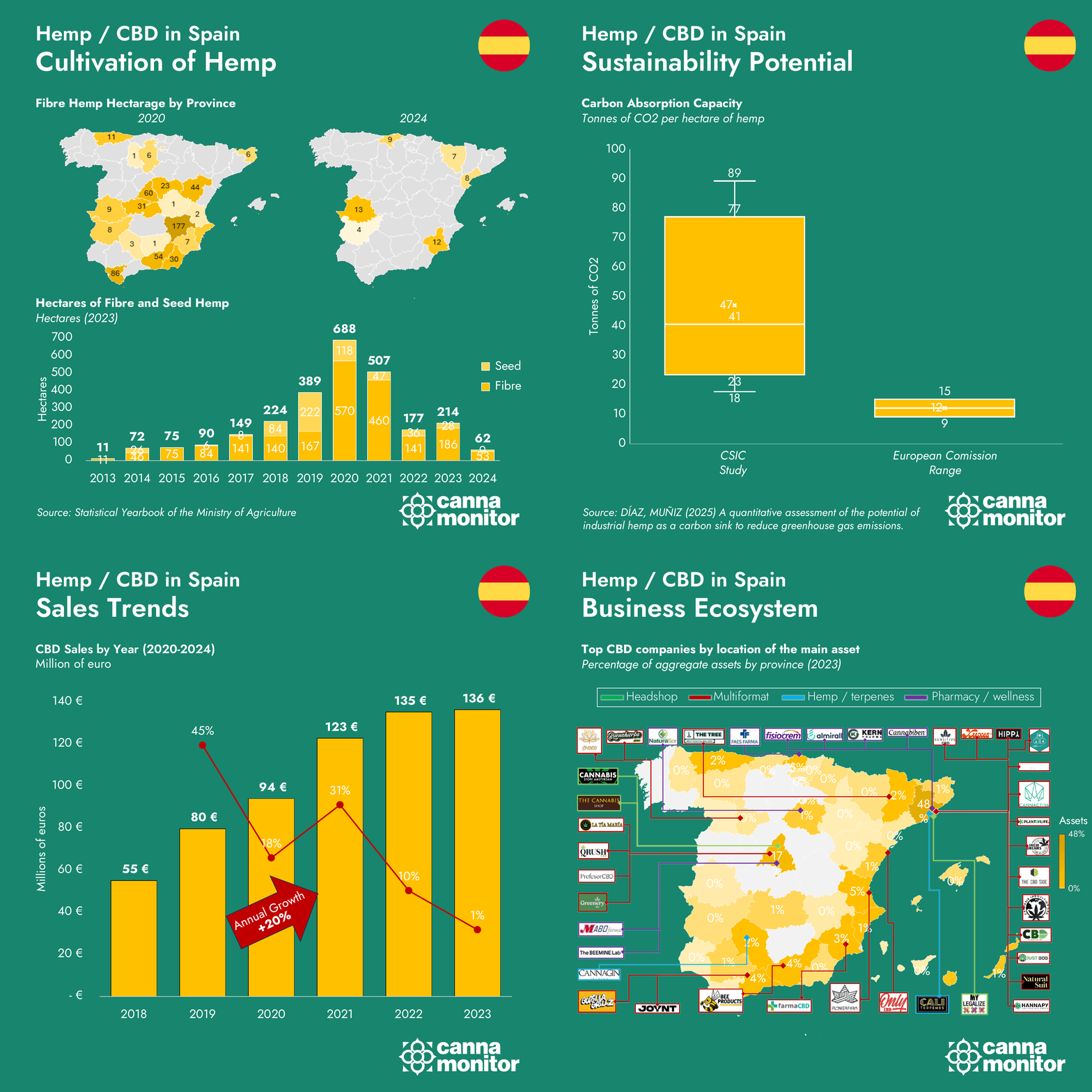
 Spain: Medical Cannabis Implementation to Face Bottlenecks as CBD Companies Plan Medical Launches
The Royal Decree 903/2025 in Spain restricts medical‑cannabis prescriptions to specialists and hospital pharmacies, creating a bottleneck in access. With only 353 hospitals equipped to dispense, demand is likely to exceed capacity, potentially forcing patients toward illegal sources despite widespread chronic‑pain needs.
- Scientific societies urge prioritisation of approved epilepsy drugs over compounded cannabis formulas for safety and efficacy in treatment. **Medical and neurological specialist societies in Spain** argue that only approved medications guarantee stable, certified compositions verified by regulatory agencies with evidence from randomized clinical trials proving safety and efficacy.
- They reserve standardized cannabis formulas for cases where no approved drug works or is suitable, warning that some cannabinoid derivatives (e.g., THC-containing) have not demonstrated antiepileptic effects and may even worsen seizures.
- Josep Allué, a leading expert in phytotherapy and medicinal-plant science. He argues that medical cannabis is unequivocally a medicine and should be regulated like any other therapeutic product, supporting Spain‘s new framework allowing cannabis-based magistral formulas but criticising hospital-only dispensing and specialist-only prescribing, advocating instead for community pharmacy access to ensure practical patient care.
- Committees will have to be formed in hospitals, whose pharmacies will be essential for creating compounded formulas and updated training.
- Chief Anti-Drug Prosecutor links cannabis use to schizophrenia, promoting prohibitionist views despite evidence suggesting otherwise and advocating for regulatory discussions.
- AEMPS workers plan to protest on November 13 due to their employment situation impacting the Agency’s operations and effectiveness.
- Madrid police officer investigated for illegal CBD shop arrests; businessmen allege abuse of power and seek legal accountability.
- Police operations against CBD shops lead to closures, harassment claims, and court dismissals of drug-related charges against business owners.
- Twenty tonnes of hashish seized in refrigerated trucks from Morocco; two criminal organisations dismantled, twenty arrests made in Spain.
The Beemine Lab aims to lead medicinal cannabis distribution in Spain, focusing on sustainability, innovation, and community-driven investment.
- ProfesorCBD plans €1.2 million turnover in 2025 with 111,000 clients and five brands in seven years; announces medicinal cannabis launch through Bioteacher, a new biotech division of the company.
Cultivar, flowering time, and fertilisation significantly influence cannabinoid, terpene, and antioxidant compound production in Cannabis sativa L.
- Spain sees record lows in tobacco and cannabis use among students aged 14 to 18, according to the ESTUDES 2025 survey. The percentage of those who have ever tried it has fallen by 5.9 points compared to 21% in 2023.
 Brazilian Health Regulator Extends Medical Rules to Veterinary Products as Associations Expand Access
ANVISA formalises veterinary cannabis prescriptions and updates regulations for cannabis product classification and control in Brazil.
- It prohibits CBD Brasil cannabis products due to lack of authorisation and recalls a specific batch of Dipyrone medication.
- It also authorises Embrapa to cultivate Cannabis for research, marking a significant advancement in Brazilian scientific production and regulation.
As associations operating under judicial monitor are granted permission to distribute. Cannect and ASPAEC partner to distribute cannabis flowers in Brazil, ensuring legal access and addressing growing patient demand for therapies.
- Brazilian mission visits Ease Labs in Colombia*,* highlighting potential for national cannabis production and regulatory advancements in Brazil.
- Universidade Federal da Paraíba (UFPB) launches project to educate on medicinal cannabis, combat misinformation, and support patients and caregivers through workshops and digital media.
- Canabinote joins USP’s incubation program to innovate medicinal cannabis prescriptions using technology based on scientific evidence and neutrality.
- Project “Cannabis in the Community” aims to provide medical cannabis access and education for vulnerable families in São Paulo.
- Proposal at COP 30 combines cannabis and honey to promote sustainable agriculture and strengthen the Amazonian bioeconomy.
Patient perceptions of off-label CBD use for insomnia show predominantly positive feedback, highlighting its therapeutic potential and safety profile.
- The study analyses patient perceptions of off-label CBD use for insomnia through sentiment analysis of Twitter data.
 Netherlands: Nine Licensed Growers in Coffee Shop Experiment Now Active as New Product Formats Launch
Almere city council debates The Boxx coffee shop’s arrival, with divisions over financial compensation and legal implications for the municipality.
- Dutch court rejects security claim against cannabis grower FYTA; main proceedings to continue in Düsseldorf regarding €11 million investment.
- Council of State upheld rejection of Outernet’s cannabis experiment application due to unavailability of the proposed location.
As of today, nine growers are active in the Closed Coffee Shop Chain Experiment , now that Growery has also successfully completed its first delivery and sale.
- Leli Holland’s cannabis facility construction is on schedule for Q1 2026, increasing production capacity fivefold and expanding product range.
- Increased demand for innovative cannabis products, including pre-rolled joints and potential medicinal items like THC suppositories, noted in Netherlands.
- Record illegal cannabis interceptions from Canada in the Netherlands exceed 53 tonnes in 2025, raising concerns over smuggling trends.
 France Will Not Limit CBD Flower Sales to Tobacconists
Parliament amends 2026 Finance Bill eliminating the Article that would have restricted CBD flower sales to tobacconists.
- The French government proposed imposing a state monopoly on the sale of CBD flowers, tha would have restricted distribution to tobacconists and a handful of yet-to-be-defined “approved networks,” while also adding a 26% excise tax on the flowers.
- The AFPC – French Association of Cannabinoid Producers – welcomed “a breath of hope for the entire French hemp industry,” reminding everyone that “hemp is not tobacco” and that the sector represents a promising industry.
- The UPCBD echoed this sentiment , describing it as a “stepping stone victory” for CBD hemp, while also noting that “nothing is yet final”.
- The French National Assembly removed Article 23 from the 2026 Finance Bill, alleviating CBD industry concerns over sales restrictions, online bans, and heavy taxation, pending Senate review by December 23.
- Louis Sarkozy publicly advocates decriminalizing drug use, challenging traditional conservative policies in France.
- His statements have generated widespread attention, highlighting the failures of criminalization and suggesting regulation and legalization as safer, more humane alternatives, while energizing reform advocates by showing openness to change within conservative circles.
La Chanvrière plans to open a new hemp processing factory in Juniville in 2027, creating around thirty new jobs.
- CBD.fr has opened two new physical stores, increasing its total number of locations to ten across the country.
- Socli, a French lime manufacturer best known for heritage restoration is entering the hemp-lime construction market with a new family of products designed for hempcrete and other plant-based building materials.
BIKY Pharma‘s BIKY Breathe device, a CE-marked medical device, demonstrated consistent aerosol delivery with a mass median aerodynamic diameter (MMAD) of 0.95 µm and respiratory THC doses of 50.3 µg/puff, achieving transfer efficiency between 45% and 54%, crucial for controlled clinical applications.
- The 2025 study conducted by Stanipharm on aerosolized THC found that modern vaping devices can efficiently deliver THC aerosols, offering a medical-cannabis alternative to smoking or oral administration with similar pharmacokinetics.
- Longitudinal study identifies childhood factors influencing cannabis use trajectories from adolescence to adulthood in a French cohort.
 Portugal: License Suspensions Deepen as Tobacco-Channel CBD is Banned
The Portuguese Tax and Customs Authority (AT) published yesterday, November 26, 2025, an official letter explicitly prohibiting the sale in the national territory of products containing extracts or preparations based on the cannabis plant, including THC and CBD, in tobacco products.
- Infarmed removed licenses for Qanali, Lda. and Batherafarm Unipessoal, Lda. from the medicinal cannabis sector in Portugal.
- The regulator hasn’t yet offered no public explanation so far, leaving open whether this is simple non‑renewal or a sign of stricter enforcement in a market already under pressure from licence suspensions, criminal investigations and shifting export rules.
Portugal‘s cannabis export dominance is threatened by regulatory delays and competition from countries like Germany, Czech Republic, and Malta.
- Bio Leaf Health to invest €2.3 million in cannabis production unit in Castelo de Vide to enhance product quality.
- Portocanna launches a new 20% THC sublingual cannabis oil, expanding therapeutic options in Portugal‘s medicinal cannabis market.
Synthetic cannabinoids CCL-106, CCL-114, and CCL-115 show promise in inhibiting pancreatic cancer growth and enhancing chemotherapy effectiveness.
 Poland: New High-Potency Medical Cannabis Flower Launches
Poland‘s Ministry of Health plans legislative changes to regulate hemp products and address issues with “green clinics” prescribing practices.
Following successful registrations of raw materials with THC levels as high as 29% (Aurora), 27% (Canopy, Cantourage), new THC-rich cannabis flower varieties are launching in the market:
- Aurora 27 Black Jelly is a new addition to the Canadian producer’s catalog, The new strain is a sativa and will be available under registration number 27/1, the same number as Farm Gas, which has been available in Poland for some time.
- Canopy Growth launches Blood Orange Kush with 27% THC, distinct from US versions, awaiting pharmacy availability in Poland.
- New shipment of Pink Kush from Aurora available in pharmacies, priced at approximately 500 PLN for 10g as of November 14, 2025.
- The Management Board of Certis Pharma, a subsidiary of Cannabis Poland, has officially announced the signing of an agreement with a Polish partner for the provision of services including, among others, adapting the partner’s operations to GMP requirements and pharmaceutical law provisions.
 Thai Medical-Only Pushback Gains International Recognition as Canna-Tourism and Adult-Use Remain
Thailand leads cannabis reform with innovation, yet faces regulatory challenges; potential for sustainable frameworks and health tourism remains significant.
- Thailand embraces cannabis as an economic driver, promoting health tourism and industry growth, unlike restrictive European approaches.
Thailand’s has established the country as a regional cannabis hub despite lack of comprehensive regulation leading to fragmented market. In June 2025 the government attempted to impose a medical‑only framework limiting legal sales to patients with prescriptions, even as a thriving adult‑use market remains.
- Early moves toward quality control, such as requiring certified cultivation standards, show commitment to safety, yet uncertainty persists over whether Thailand will manage to build a sustainable regulatory system.
- The outcome will determine whether Thailand becomes a model for responsible cannabis policy or a cautionary tale of reform without structure.
- Irie Seeds partners with Royal Queen Seeds to introduce F1 Hybrid cannabis seeds to Thailand for improved cultivation outcomes.
Mathematical model developed for efficient Δ9-THC removal from hemp seed husks, enhancing economic viability and regulatory compliance.
- Developed a mathematical model for selective Δ9-THC extraction from hemp seed husks, enhancing economic viability and compliance with regulations.
 Israel: Operators Face Compliance Scandals, Potential Bankruptcies
Yossi Meshi sentenced to 32 months in prison after six years on the run, as part of Telegrass organisation’s plea agreement.
Israel’s medical cannabis program constrained by recent HMO-led reforms caused a 7.5% decline and highlight oversight and data gaps.
- IM Cannabis Corp. to report Q3 2025 financial results, focusing on sustainable growth in Israel and Germany.
- One of Israel’s largest growers, David and Goliath Pharma faces liquidation due to insolvency, unpaid wages, and legal disputes with employees and former management.
- Bazelet Pharma faces an eviction lawsuit for unpaid rent of NIS 123,000 (US$38k) and claims of insolvency, amid pension funds suing for debts exceeding NIS 1.1 million ($US340k). The company has downsized operations and closed its trading house, raising concerns about its financial stability.
- Greenkom faces closure and proposes control transfer to retired police officials, amid allegations of cannabis sales to criminals. The Ministry of Health’s decision followed extensive police investigations, with significant implications for 180 families and an investment of 45 million shekels.
Israel‘s medical cannabis programme saw significant regulatory changes, increasing patient access but facing challenges post-HMO prescription reform.
- THC significantly reduces pain in fibromyalgia, enhancing offset analgesia but not affecting conditioned pain modulation mechanisms.
 Austria: CBD Shops Fear Tobacco Monopoly
Austrian hemp shops oppose government law restricting smokable cannabis sales to tobacconists, threatening their economic survival and seeking legal action.
- The Austrian Cannabis Association (ÖCB) files constitutional complaint against Tobacco Monopoly Act amendment, threatening CBD shops and jobs amid economic crisis in Austria.
Austria plans a transitional arrangement under which CBD‑flowers will remain legal in specialized shops until the end of 2028, provided those shops obtain a “hemp‑license” and comply with stricter regulations.
- Beginning in 2029, sales of CBD‑flowers are slated to be limited exclusively to tobacco‑licensed Trafiken (tobacco shops). Many current CBD‑shops, having lost their main product, face financial collapse — roughly 500 shops and about 1,500 jobs are reported at risk, with some merchants experiencing up to a 70% drop in revenue after the 2025 restriction.
- The industry association warns that treating CBD like tobacco ignores legal and scientific arguments: a legal opinion concludes that hemp flowers are not tobacco products, and the restrictive regime could stifle a € 500 million‑per‑year market and cost the state millions in lost tax.
 New Zealand: Kiwi Operators Expand Internationally
It has been reported in New Zealand Herald that some people are increasingly using dating apps to facilitate drug deals, vendors advertise illegal drugs via secret signals and emojis on their profiles instead of using traditional dealers or street networks.
Rua Bioscience seeks capital to support rapid sales growth across five key markets, inviting existing shareholders to participate in the offer.
- Puro achieved a milestone by completing the country’s first export of certified organic, GACP-produced solventless hash to Australia for processing by Epsilon. This hash will be refined into rosin for UK buyers, marking a significant entry into the international cannabis market.
- Hemp processor Rubisco is relocating to a larger facility in Ashburton to meet rising demand for hemp processing and enhance production capabilities.
New Zealand’s Substance Outcome Harm Index reveals key findings about drug-related harms:
- 63.1% of respondents reported no negative outcomes from drug use.
- Most common harms reported: Mental health issues: 19.0% Money problems: 18.2% Physical health impacts: 14.6% Relationship difficulties: 14.3%
- Less common harms:Work or study problems: 10.5%. Unsafe driving: 6.7%. Personal safety concerns: 6.7%. Legal issues: 3.1%
- Substance attribution: 60% identified a single drug as responsible 26.3% identified two drugs 9% identified three drugs.
 South Africa: Hemp up to 2% THC Enters Formal Seed Law to Boost Production
Government commits to inclusive cannabis reform, engaging stakeholders to shape future regulations for private clubs and legacy communities.
- South Africa has activated its long‑delayed Plant Improvement Act (2018), effective December 1, 2025, replacing a 1976 law and creating a modern regulatory framework for seed and crop quality.
- The update legally includes Cannabis sativa (hemp) varieties, now allowing industrial hemp cultivation with up to 2% THC. This change establishes national registration, certification and regulation for seeds and propagating material, paving the way for expansion in hemp fibre, seed, oil and flower industries.
- The reform is expected to benefit farmers, support sustainable agriculture, and boost South Africa’s emerging hemp sector.
- The update legally includes Cannabis sativa (hemp) varieties, now allowing industrial hemp cultivation with up to 2% THC. This change establishes national registration, certification and regulation for seeds and propagating material, paving the way for expansion in hemp fibre, seed, oil and flower industries.
- DTIC’s John Jeffery advocates for inclusive cannabis policy, addressing arrests and engaging stakeholders for regulatory reforms in South Africa.
- Donor politics hinder cannabis reform, creating exclusion and stagnation while benefiting corporates over traditional farmers and communities.
Green Route Hemp Industries is developing a value chain to boost South Africa‘s hemp industry through processing hubs and farmer support.
 Japan: Ultra‑Low THC Thresholds Keep CBD under Surveillance
International hemp market event in Tokyo focuses on compliance with new Japanese regulations and fostering global business opportunities.
Tokyo authorities detected Δ9‑THC levels above the legal limit of 0.1 ppm in a “Pillow CBD Night Drink” produced by Balanced and Tampopo Industries. The drink had already expired in July 2025 and was no longer sold.
- The manufacturer claimed the CBD used was synthetic and high-purity, and production occurred once after initial tests showed no issues.
- Similar incidents occurred earlier in May, with a CBD gummy in Fukuoka exceeding THC limits by several tens of times. Authorities continue monitoring CBD products due to contamination risks.
 Czech Republic: Market expands with Premium Domestic and Imported Strains
The country plans to implement a cannabis reform starting 1 January 2026 allowing adults 21+ to grow up to three plants at home, store up to 100 g of dried cannabis at home and carry up to 25 g in public.
- From January 1, 2026, adults can grow up to three cannabis plants, possess 100 grams at home, and 25 grams publicly; 4-5 plants result in a fine, while selling remains illegal.
SensiQure‘s new cannabis variety shows positive reviews, featuring high terpene content over 2%, effective for chronic pain and menstrual discomfort, with ratings averaging 5/5 from two votes.
- MeCann, a Canadian cannabis variety, received positive reviews from Czech patients for its lemon aroma and effective pain relief, rated 5/5 by users with chronic back pain and painful menstruation.
 Morocco: ANRAC Plans 2026 Season as European CBD Sector Becomes Target
ANRAC plans 2026 planting season: permits only to be granted where processing companies or cooperatives commit to marketing all crops, paying farmers on time, and following the agency’s technical procedures for both Beldiya and imported varieties.
- ANRAC intensifies meetings with cannabis cooperatives, requiring 2026 plans by December 20, 2025, ensuring farmers’ dues are settled for 2024-2025, with cultivation timelines set from January to June 2026.
- Morocco reduces illegal cannabis cultivation by 85% while enhancing anti-trafficking operations and addressing drug user rehabilitation needs.
- Gibraltar strait traffickers use homemade drones to transport approximately 200 kilograms of cannabis resin to Spain.
Moroccan companies target Europe’s CBD sector in Prague trade show, showcasing products like cosmetics and medical cannabis derivatives, establishing marketing channels given Morocco’s competitive edge in EU markets with THC limits.
Morocco‘s cannabis legalisation presents economic opportunities but poses significant ecological risks, including deforestation and environmental degradation in the Rif.
 Lebanon: Hezbollah’s Weakened Grip Creates Opening to Contest Cannabis Licensing Control
The Cannabis Regulatory Authority is expected to be formalised by July.
- Some speculate that a system similar to the state-run tobacco monopoly (Régie Libanaise) might be implemented, where only certain individuals would receive licenses to produce and sell cannabis.
- Given the entrenched corruption within Lebanon’s institutions, such licenses would likely go to those aligned with dominant political parties: Hezbollah and Amal in Shiite-majority regions – reinforcing existing monopolies and leaving the farmers vulnerable.
- With recent shifts in regional power, Hezbollah and the Syrian regime have lost the ability to maintain control over smuggling and trade routes.
- Lebanon‘s cannabis industry could boost revenue from $828 million to $1.79 billion by 2025, yet legalisation risks benefiting corrupt politicians over struggling farmers in the Beqaa Valley.
 Switzerland: Municipal Council, Industry Back Legalisation Proposal
Lucerne City Council supports cannabis legalization, advocating for regulated access to ensure safety and competitiveness against the black market.
- Swiss Hemp Association supports cannabis law draft, aiming for a safe, legal market to combat black market and ensure health protection.
Switzerland‘s first carbon-sink certified hempcrete building launched a new CO₂ certificate programme for biogenic construction materials.
- GrowMotion launches Tricho Jordan strain with 27% THC in German pharmacies via importer alephSana, featuring unique aroma and taste.
- Switzerland aims for a transparent cannabis market prioritising consumer protection, learning from Germany‘s regulatory mistakes for effective legislation.
 Europe: EFSA Treats Delta-8 and Delta-9 THC as Equally Potent
EFSA now treats delta-8 THC and delta-9 THC as having the same potency, and therefore applies the same acute reference dose of 1 µg/kg body weight per day to the sum of delta-8 + delta-9 THC, instead of only to delta-9 THC.
- This change is based on clinical study data comparing effects of both cannabinoids: the estimated relative potency ratio (Δ9-THC/Δ8-THC) ranges from 1–1.4 (with 95% confidence interval 0.97–1.63), so EFSA’s CONTAM Panel chose a conservative factor of 1 (i.e., they assume equal potency).
European School Survey on Alcohol and Other Drugs report provides critical insights and data on substance use trends among students across Europe.
- On average, 12 % of European 15–16‑year‑olds report lifetime use of cannabis, cannabis is seen as the easiest illicit drug to obtain (≈ 26‑32 %), and overall youth drug use continues to decline across most participating countries.
Czech Republic: Market Expands with Premium Domestic and Imported Strains
From January 1, 2026, individuals over 21 in the Czech Republic can legally grow up to three cannabis plants for personal use and possess up to 100 grams of dry matter at home. Growing 4-5 plants is a misdemeanor, while selling and donating cannabis remains illegal, enhancing certainty for medicinal users.
SensiQure has introduced a highly-rated Czech-grown cannabis variety, Gary Payton, with 21.8% THC and a terpene content exceeding 2%.
- Mecann, a cannabis brand importing from Canada, has introduced Lemonatti, a new 23.5% “fruity” variety praised by Czech patients.
 Danish Medical Distribution Sector Consolidates
Cannabis use among young Danes has decreased significantly, with consumption among 15-25 year-olds dropping from 44% in 2014 to 31.6% in 2025, particularly among young men (51% to 34%). This decline is attributed to increased awareness and educational campaigns.
Stenocare expanded its portfolio by acquiring CannGros ApS from DanCann adding flower-based medical cannabis and aiming for DKK 4–6 million in annual revenue to help reach break-even by 2026.
Survey among medicinal cannabis patients reveals that 67% reported moderate to large effects, while over 10% experienced three or more side effects. Notably, side effects like cognitive dysfunction and dizziness were unrelated to the perceived benefits, highlighting the need for further research.
 Finland: Left Alliance’s Endorses Full Legalisation
The Left Alliance in Finland has endorsed legalizing cannabis and its regulated sale in state shops, including limited personal cultivation. This marks the first time the party supports full legalization, having previously only called for decriminalizing small-scale use and possession.
- With this move, it becomes the second parliamentary party in Finland to back legalization, following another party that did so in 2024.
 Norway: Youth Cannabis Use Rising, Mostly Among Low-Risk Consumers
Cannabis use among Norwegian youth has increased, driven by curiosity and social factors, with varying patterns of usage identified.
- Researchers at OsloMet identified four patterns among young users: experimental, occasional/social, subcultural, and a small “vulnerable” group; the latter often linked to loneliness or mental-health struggles and more frequent use.
- Most users belong to the first three groups and do not need moral lectures; only a minority may need targeted help. The findings highlight that cannabis use among youth is complex and that responses should be nuanced rather than one-size-fits-all.
 Sweden Bans Multiple Synthetic Cannabinoids
Sweden‘s Public Health Agency proposes classifying ten unregulated substances as narcotics due to health risks;
- Cannabinoids: ADB-5Br-PINACA, MDMB-5Br-4en-PINACA, MDMB-BUTINACA.
- Opioids: 7-hydroxymitragynine, Pseudoindoxylmitragynine, Methiodone.
- Benzodiazepines: Clobromazolam.
- Psychedelic substances: 1S-LSD, 1T-LSD, Muscimol.
 Romania: Preclinical Data Suggests Chronic Use May Be Neurologically Well‑Tolerated
Chronic administration of Cannabixir Medium Flos shows no adverse effects on health or brain structure in aging mice. This suggests that long-term use of this cannabis product was well-tolerated from a neurological perspective.
- The mice that received regular doses of this cannabis extract over an extended period did not show signs of brain damage or deterioration in their overall health compared to control groups.
- This is important preclinical evidence suggesting that chronic cannabis use, at least with this particular formulation, may not cause harmful changes to brain tissue or general physiological health in aging subjects.
 Argentina: Provincial Progress Meets National Government Stalling
Government extends intervention of cannabis regulatory agency for one year to ensure institutional continuity and regulatory security in the industry.
- Tierra del Fuego regulates medicinal cannabis, establishing a provincial programme for research, patient registration, and equitable access to treatments.
- Tucumán police raid medicinal cannabis growers with REPROCANN permits, highlighting regulatory disconnect and calls for improved drug policy and support.
Cannabis beverages are growing globally, but Argentina‘s strict THC laws limit market potential, focusing on CBD wellness products instead.
Large-scale CBD study treating 551 children with treatment-resistant developmental and epileptic encephalopathies, with 50.6% experiencing a >50% seizure frequency reduction. High doses were safely administered, supporting early initiation even in infants, highlighting its potential as a transformative therapy in paediatric epilepsy care.
 Colombia Readies for Flower Sales with Regulations to Be Issued before April 2026
Colombia legalised medicinal cannabis flower sales, but concerns arise over market concentration favouring large industries due to regulatory gaps that could exclude small growers, depending on the required standards.
- Colombia hosts first oncology course on cannabis, reflecting growing interest in therapeutic cannabis integration for cancer patients in Latin America.
 Uruguay: Seedlings Now Allowed for Legal Sale
ExpoCannabis 2025 in Uruguay will allow legal purchase of seedlings for the first time, celebrating cannabis policy advancements and José Mujica.
 Panama: Patient Registration Pathways Still Missing to Grant Access
Medicinal cannabis in Panama faces delays as patient registration, doctor training, and pricing remain significant concerns for future access.
 Peru: New Hemp Rules Maintain Drug Regulators’ Oversight
Peru proposes new hemp regulations, designating Digemid and Dirandro as authorities amid concerns over bureaucratic obstacles and past failures.
 Costa Rica: Presidential Candidates Support Full Legalisation
Three presidential candidates support the potential legalisation of recreational cannabis in Costa Rica. Key developments include previous attempts at legalisation, the constitutional barriers faced, and the prospects of altering international treaties or constitutional interpretations.
 Zimbabwe Plans Landrace Research
Agricuilture Minister praised Thathokuhle Farm’s innovative practices, emphasising the government’s support for cannabis and hemp as vital industrial crops, aiming to enhance value addition and attract more growers. The farm dedicates two hectares to greenhouse cannabis and five hectares to open-field cultivation.
Review plans full characterisation of several Southern African cannabis landraces to bring them under formal utilization for THC, CBD and CBG.
 Botswana: Pilot Cannabis Trials to Join Southern Africa’s Hemp Economy and Diversify Agriculture
Botswana initiates cannabis cultivation trials, joining southern Africa‘s hemp economy, aiming to diversify agriculture and boost GDP contributions.
 Namibia’s Police-Led BIll Opens Path to Regulated Cannabis amid Constitutional Court Challenges
Namibia‘s police chief announces a bill for regulated cannabis use amid ongoing constitutional court challenges by GUN.